


Klenovica is a small fishing village on the Kvarner coast, about nine kilometres south of Novi Vinodolski. It is compact enough to explore without a complicated plan, but it has more character than a simple roadside beach stop. A working harbour forms the centre of the village, boats and restaurants line the waterfront, and beaches continue along a shore framed by the sea and the rocky mountains behind it.
The strongest reason to visit is the combination of everyday maritime life and a relaxed holiday atmosphere. Klenovica has not lost its fishing identity. The harbour is used by local and commercial boats, a fisherman’s monument stands by the water, and official local sources still present seafood as a central part of the village experience.
This first-hand guide explains what you can realistically do in Klenovica and which conditions to check before choosing a particular beach section.
What Klenovica feels like
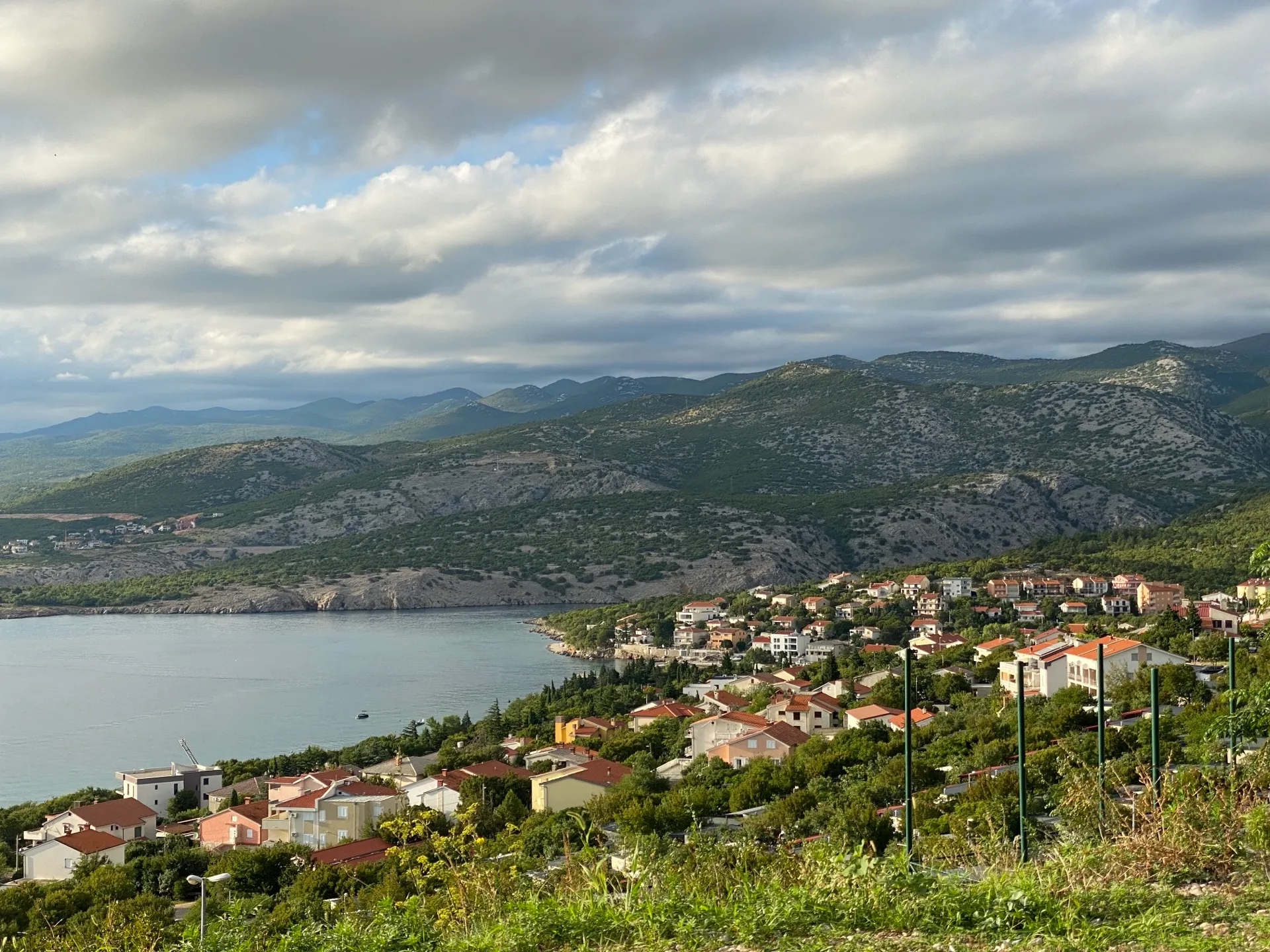
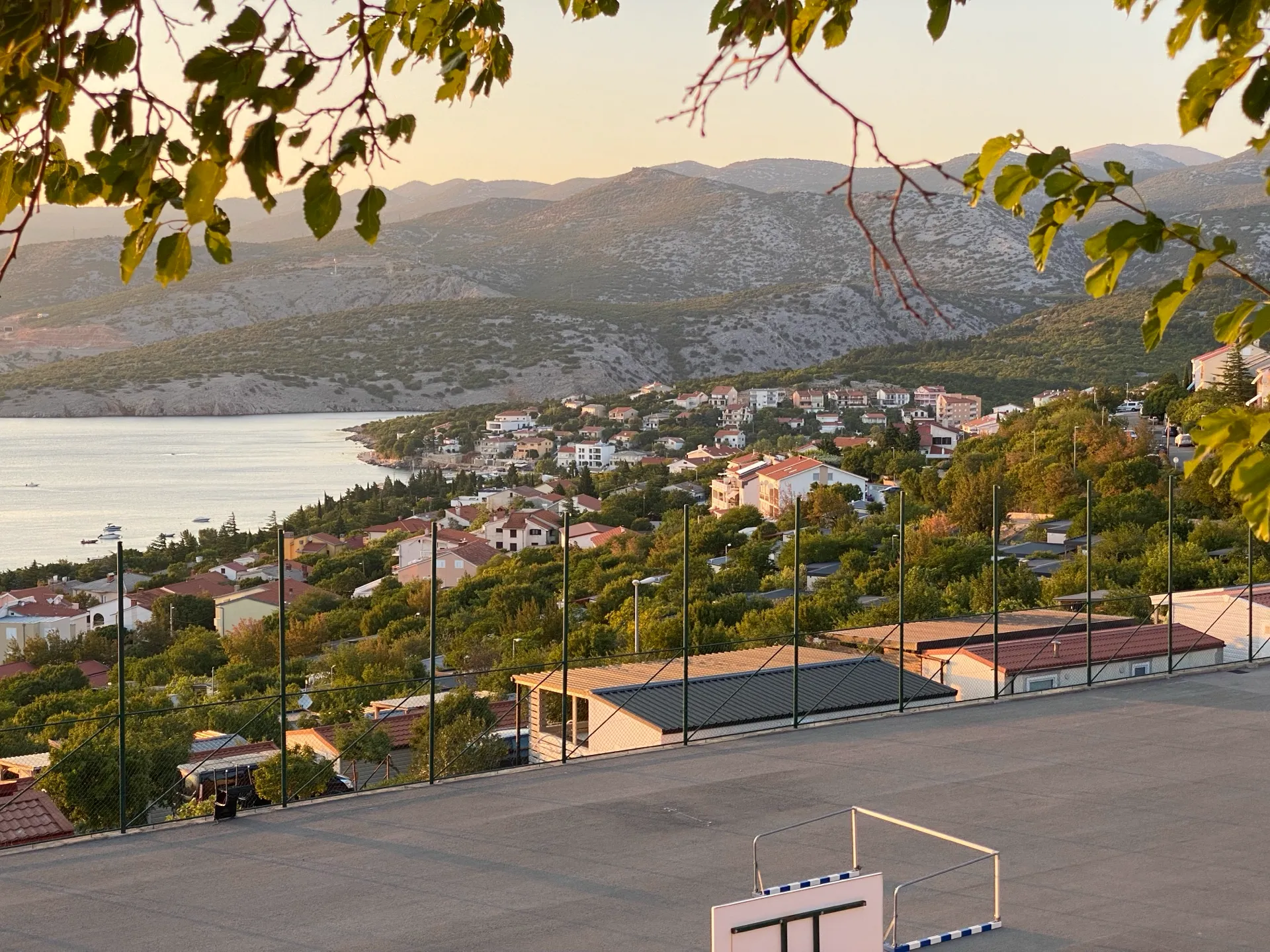
Klenovica rises from the harbour towards the main coastal road and the hills. From above, red-roofed houses and holiday accommodation spread across the slope, while the waterfront remains visually compact. The mountains make the setting feel dramatic, especially when weather moves across the Kvarner Channel.
This is not a preserved old town with a long list of monuments, nor is it a large resort with nightlife and shopping streets. Its appeal is more direct: wake up near the sea, walk to the harbour, choose a beach section, eat fish or pizza, and watch the light change over the water.
The village can become busy in summer because accommodation and campsites add many seasonal guests. Even then, it feels smaller and more local than central Novi Vinodolski or Crikvenica.
The working harbour
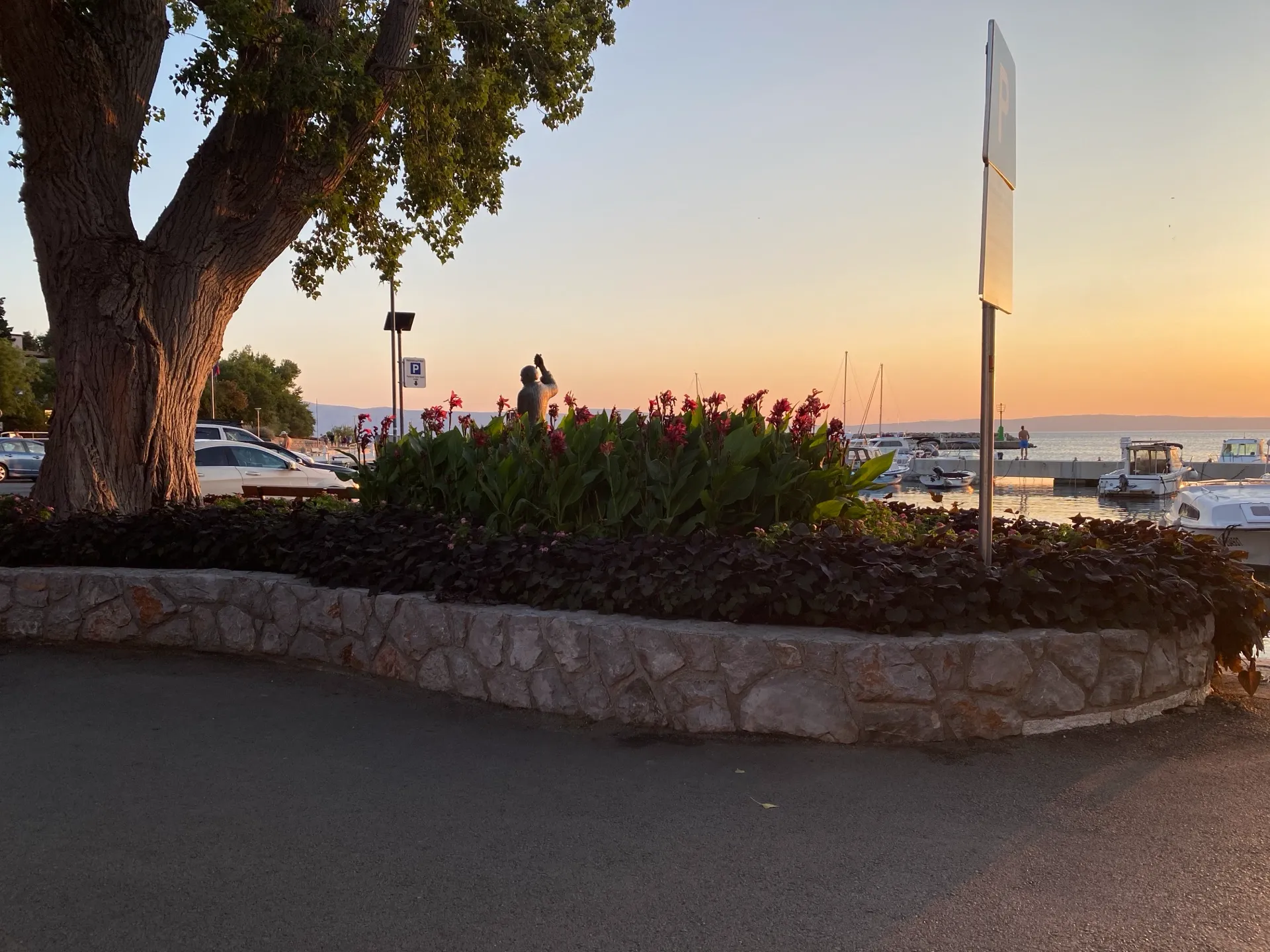
The harbour is the natural starting point for a visit. Official information describes the Port of Klenovica as a working public port used by fishing vessels, other commercial boats and local craft. It has a protective breakwater, operational shore and mooring area. That working function is important: the boats are not arranged as decoration, and some areas need to remain clear for unloading and manoeuvring.
For visitors, the harbour provides the best sense of place. A short walk reveals fishing boats, small leisure craft, the breakwater and waterfront buildings. The fisherman’s monument reinforces Klenovica’s connection with the sea.
Stay on public paths, follow signs and avoid blocking the operational edge. Children should be supervised closely around moorings and unprotected drops. Swimming inside a working harbour is not a substitute for using recognised beach sections.
Fishing heritage and the Fishermen’s House
Klenovica’s fishing story is more than a marketing slogan. Official local history refers to fishing, tuna traps and the relationship between the settlement and the clean waters around Žrnovnica. The modern Interpretation Center Fishermen’s House presents this heritage through objects collected from local families, models and multimedia material.
The centre is located by the shore and also houses the Klenovica tourist information point. It can add useful context to a beach day, particularly for visitors interested in how coastal communities lived before tourism became dominant.
Opening hours should be checked directly before visiting. Small interpretation centres often work seasonally or on limited days, and an online listing is not proof that the door will be open at any particular time.
Beaches in Klenovica
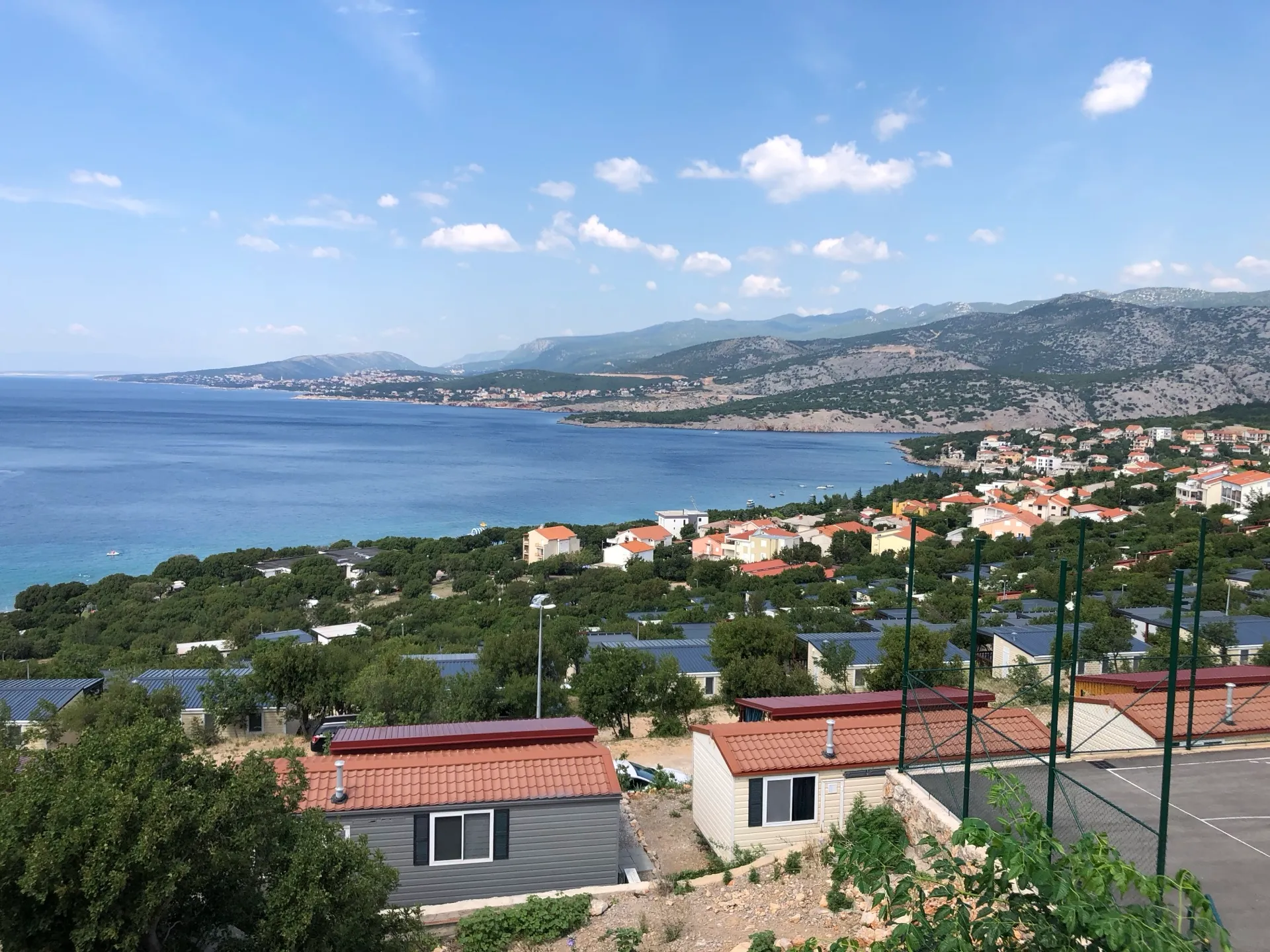
Klenovica does not have one uniform beach. Official pages describe a mixture of pebble, concrete and rocky sections along the village. Some areas are easier for families, while others are more suitable for confident swimmers who are comfortable with rocks or built entries.
The clean water and open views are major strengths. The shore also benefits from the dramatic contrast between blue sea and the pale, rugged landscape behind the settlement. On calm days, the harbour and coves can look sheltered, but the Kvarner weather can change quickly.
Official information mentions food, sunbed and umbrella rental, a children’s playground and water activities. These are seasonal services and should not be assumed to operate at every beach section or outside the main summer period.
This guide gives a general overview of the village, harbour and coastline. Before choosing a specific beach section, compare the water entry, shade, toilets and services available on the day of your visit.
The waterfront walk
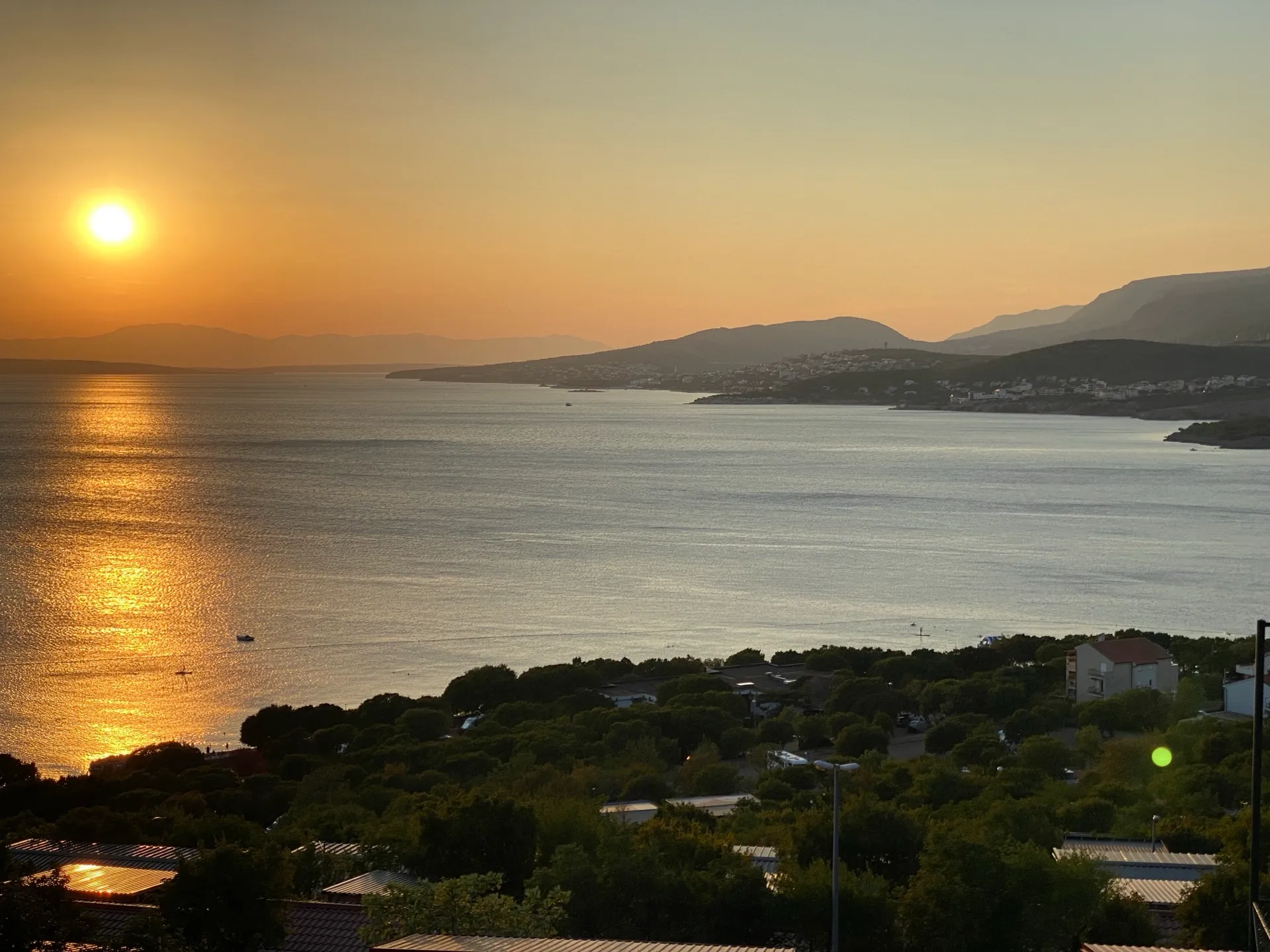
The waterfront is not a long urban boulevard. It is a village-scale route around the harbour and along the bathing coast. That makes it easy to combine a short walk with coffee, dinner or a swim.
The official Riviera guide says the seaside promenade connects Klenovica in the direction of neighbouring Smokvica. Before treating it as a continuous family route, check the exact surface and access. Coastal paths can include narrow sections, steps or passages close to private properties.
The harbour is especially attractive around sunset. Boats become silhouettes, the village lights reflect in the water, and the mountains create a dark backdrop. Our evening photographs capture this atmosphere well and make Klenovica suitable for a visit even when swimming is not the main purpose.
Restaurants, seafood and pizza
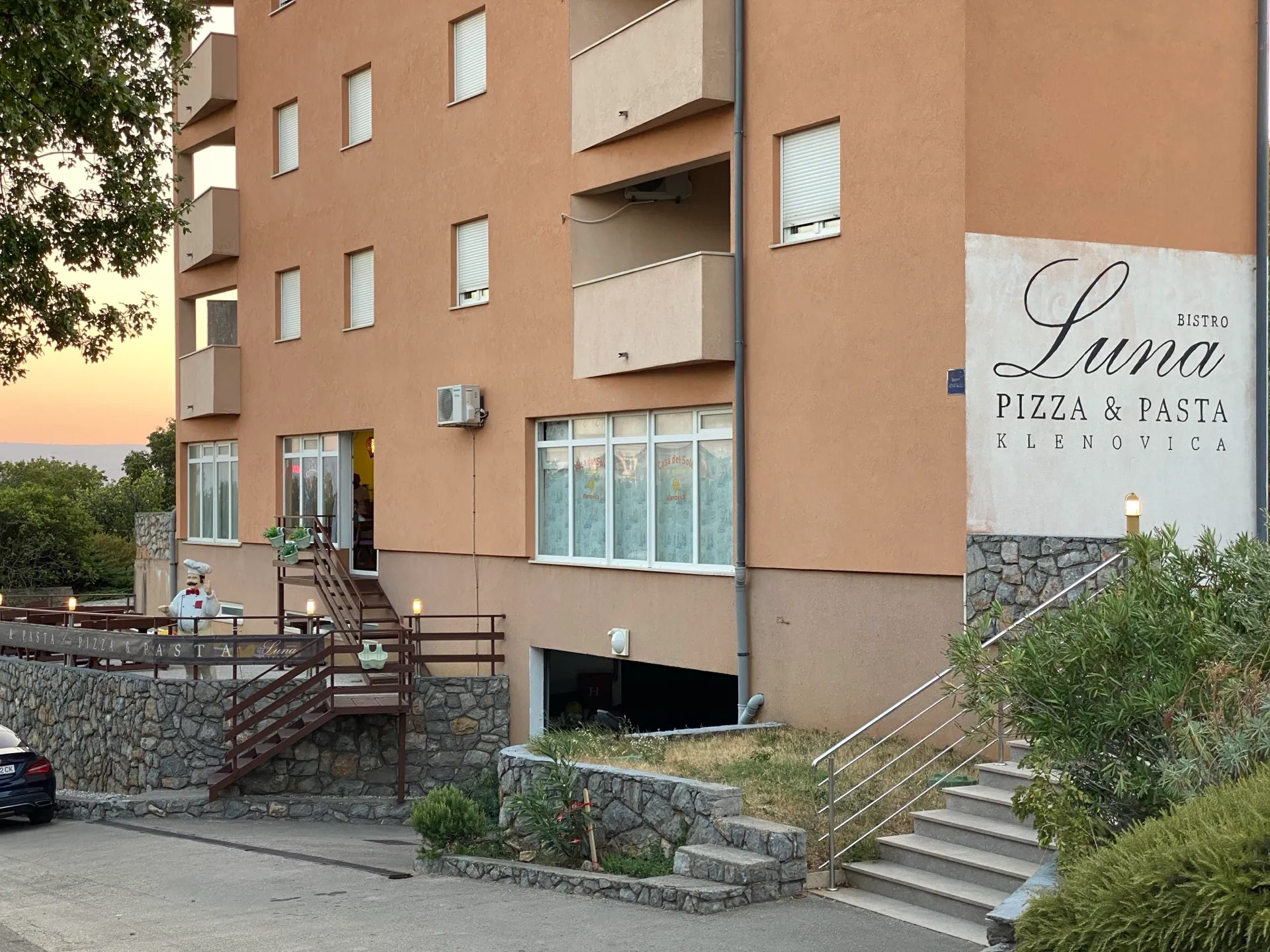
Food is part of Klenovica’s identity. Official tourism pages emphasise fish restaurants and the direct link between the sea and the plate. The owner’s experience also confirms that the village has restaurants, cafés and a pizzeria near the waterfront.
That does not mean every restaurant serves the day’s local catch or that every venue operates year-round. Ask what is fresh, check the menu and confirm opening hours. A waterfront location is part of the atmosphere, but quality and prices still need to be judged individually.
One appealing feature is how closely some tables sit to the harbour. Small boats can approach the waterfront, and the relationship between dining and the working sea feels immediate. Visitors arriving by boat must follow port rules and use authorised moorings rather than stopping wherever a table is visible.
Parking and access
Klenovica is reached from the Adriatic coastal road, with local streets descending towards the harbour. Our photographs show central parking areas beside the waterfront. They are convenient, but the spaces fill more quickly during dinner hours and in July and August.
Do not assume parking is free simply because a space appears open. Read the current sign, payment instructions and time restrictions. Some areas may serve the port, restaurants, residents or accommodation.
If the centre is busy, consider parking farther uphill where legally allowed and walking down. Remember that the return climb can feel demanding in summer heat. Never stop on a narrow road or block access used by boats, deliveries or emergency services.
Who will enjoy Klenovica?
Klenovica is a strong choice for:
- travellers who like small working harbours and maritime atmosphere;
- couples who want a quiet waterfront dinner and an evening walk;
- families willing to choose a suitable beach section rather than one huge resort beach;
- seafood lovers interested in the village’s fishing identity;
- visitors based in Novi Vinodolski who want a half-day change of scenery;
- campers and apartment guests who prefer a smaller settlement.
It is less suitable for travellers who need nightlife, extensive shopping, a large pedestrian old town or a single fully serviced beach. Those priorities are easier to satisfy in Novi Vinodolski or Crikvenica.
A simple half-day plan
Start at the harbour before the hottest part of the day. Walk around the public waterfront, see the fisherman’s monument and check whether the Fishermen’s House is open. Then inspect the beach sections and choose the entry that fits your group.
After swimming, stop for lunch or coffee. If you visit later, reverse the plan: arrive in the afternoon, walk and swim, then have dinner as the sun sets over the water.
Klenovica also combines naturally with Smokvica Krmpotska. Visit Klenovica for the harbour and meal, and use Smokvica for a quieter small beach. Driving between the two is the simplest option until the entire shoreline route has been checked.
Weather and the best time to visit
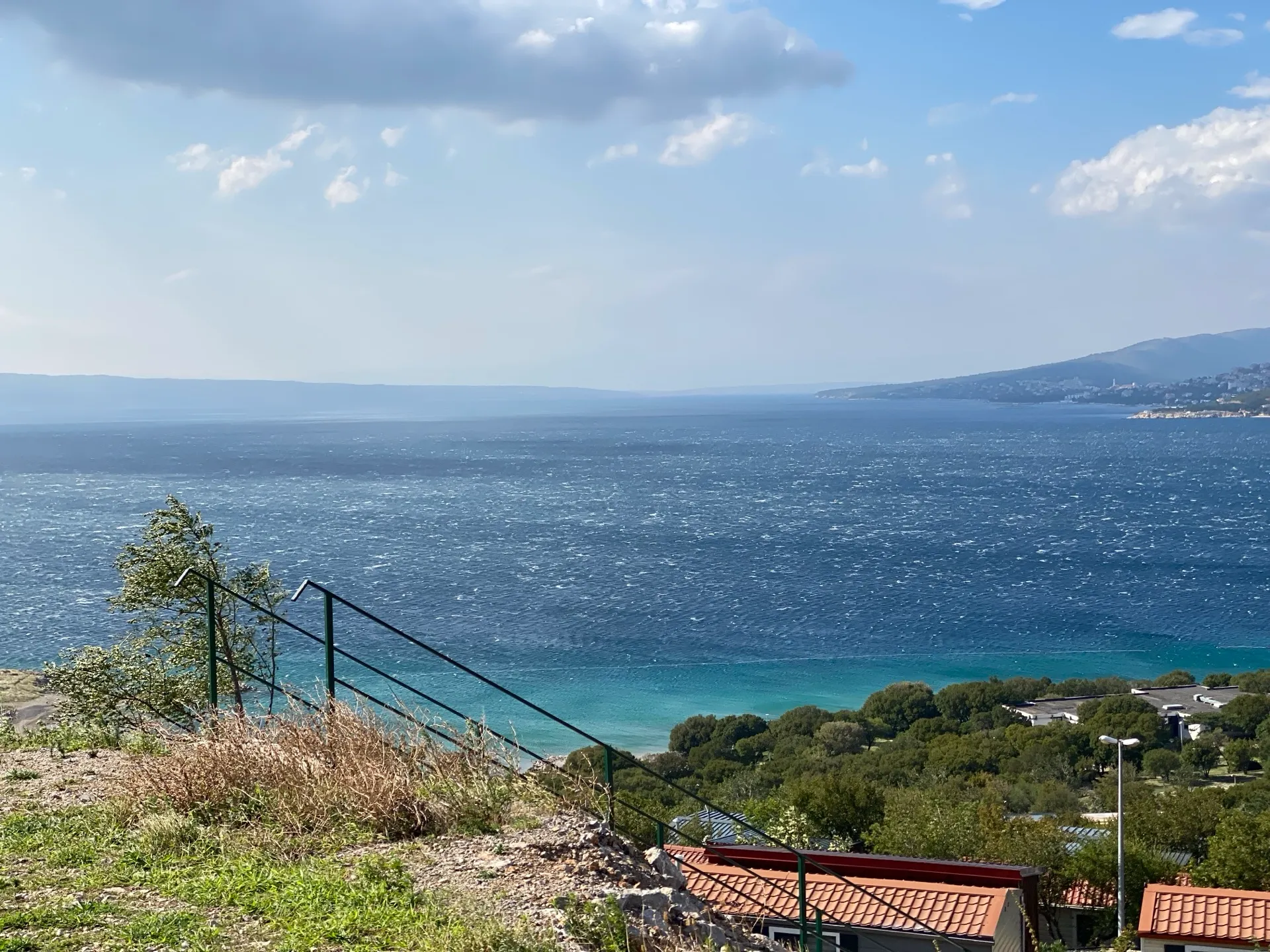
June and September often give the best balance of warm weather and manageable crowds. July and August provide the full summer atmosphere but make parking and restaurant tables less predictable.
The Kvarner coast is known for powerful winds, especially the bura. A photograph of a visibly wind-roughened sea is a useful reminder that conditions can change the character of the coast completely. Check the forecast, respect warnings and do not enter exposed water when the sea is unsafe.
Morning is best for a calm harbour and easier parking. Evening is best for atmosphere and photography. If you want both swimming and dinner in high season, arriving before the late-afternoon rush is sensible.
Compare the coast with our guide to the best beaches around Novi Vinodolski.
Our verdict
Klenovica is more than a beach stop. Its working harbour, fishing heritage, restaurants and mountain-backed coastline give the village a clear identity. It is small enough to understand quickly but varied enough for a satisfying half day.
Come for a harbour walk, choose a beach carefully and stay for a meal by the water. Keep expectations realistic about seasonal services and parking, and check the wind before setting out. Klenovica is at its best when you let the rhythm of the harbour — rather than a long checklist of attractions — shape the visit.
Last updated: 9 August 2026.
[…] and a lively centre within the same compact resort. It is larger and busier than nearby Selce or Klenovica, yet the waterfront remains easy to understand: the harbour and central square form the social […]