

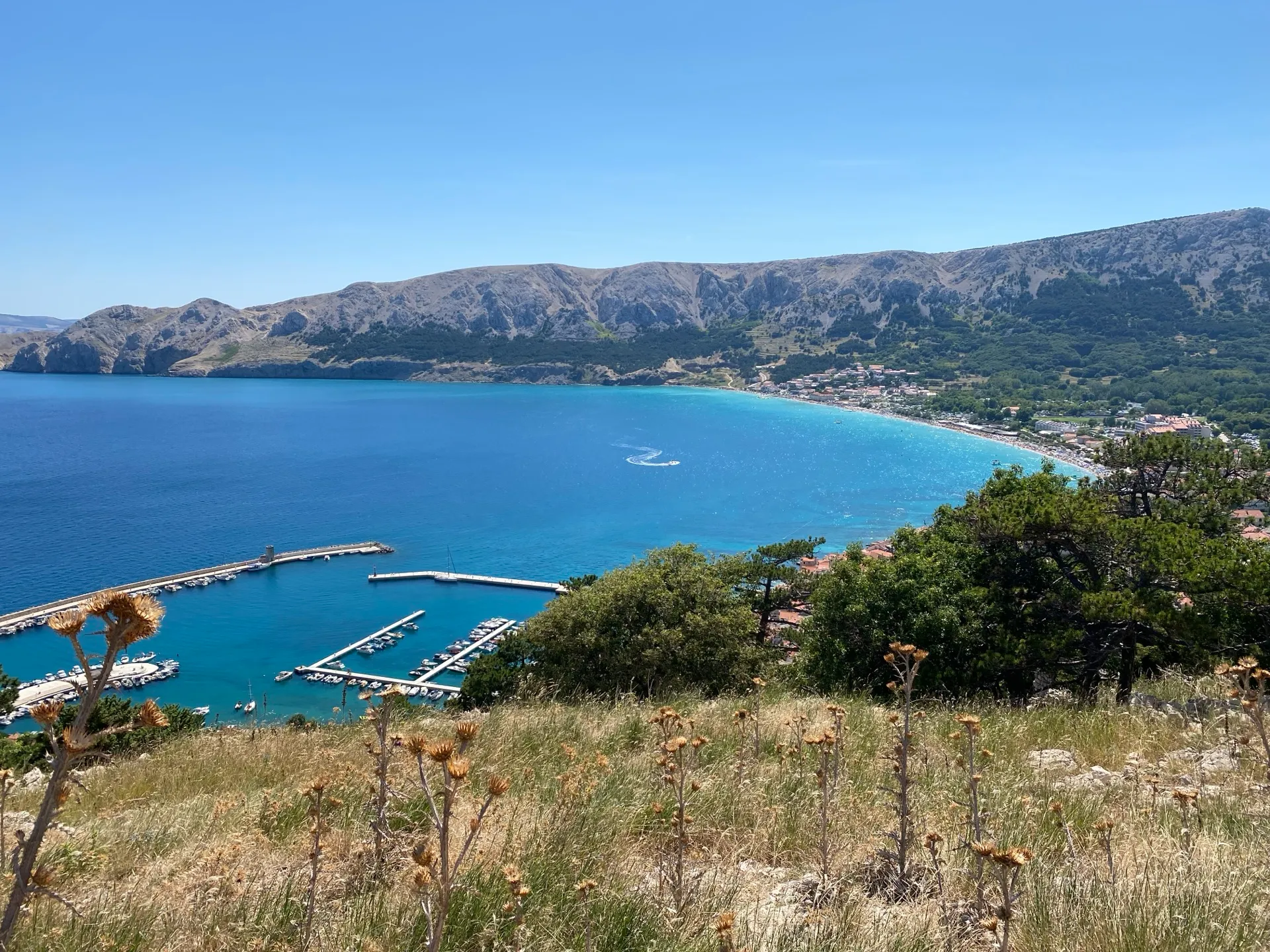

Baška sits at the southern end of Krk Island inside one of the most recognisable bays in the northern Adriatic. A long pebble beach curves in front of the town, clear water fills the bay, and pale karst mountains rise sharply behind the rooftops. The setting feels more dramatic than a typical compact island resort.
The main reason to come is Vela Plaža, Baška’s 1.8-kilometre town beach. Yet the destination is more than a place to put down a towel. Narrow lanes, a small harbour, waterfront terraces and hillside viewpoints give you enough variety for a full day or a longer beach holiday.
Baška is especially appealing to families, active travellers and anyone who likes a lively resort with most essentials within walking distance. Its main drawback is equally clear: in July and August, the famous beach, parking areas and promenade can become very busy. This guide shows both sides, using our own photographs and video from Baška alongside current official information.
Baška at a glance
Choose Baška if you want:
- a long, organised pebble beach in the centre of a resort;
- transparent water and a broad mountain-and-sea panorama;
- cafés, restaurants and the harbour within an easy walk;
- short old-town walks as a break from the beach;
- access to marked hiking routes and boat trips to remote coves;
- a practical base for the southern part of Krk Island.
Consider a quieter village if you need an almost empty beach in peak season, guaranteed shade at the water’s edge or easy parking beside your towel. Baška is beautiful, but it is not a hidden destination.
Vela Plaža: what the main beach is really like
The official Baška Tourist Board describes Vela Plaža as a 1.8-kilometre beach and one of the symbols of the town. Our material confirms the scale: the beach follows much of the bay, with accommodation and resort services behind it and the rocky slopes closing the view at both ends.
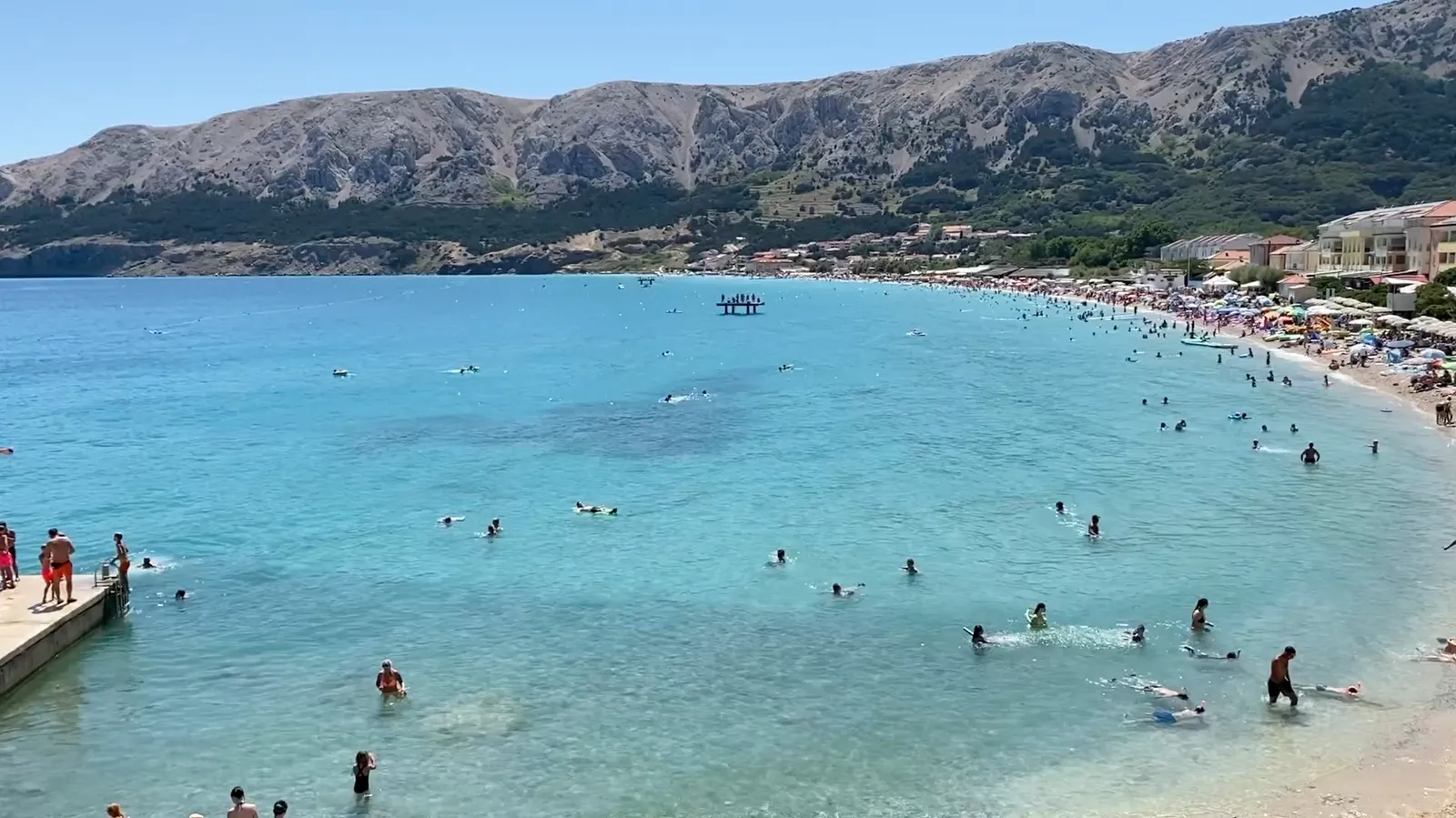
The shore is pebbly. In our close beach footage, the water is clear enough to see the stones beneath the surface, but the exact size of the pebbles and the gradient can change along such a long beach. Water shoes are a sensible addition, particularly for children or visitors who find pebbles uncomfortable.
The central advantage is convenience. Official information lists cafés and restaurants around the beach, plus seasonal rentals such as sunbeds, umbrellas and water-sport equipment. Treat these as seasonal services rather than permanent guarantees. Opening dates, operators and individual facilities can change.
Most of the shore shown in our photographs is exposed to direct sun. Some shade may be available from buildings, umbrellas or vegetation behind parts of the beach, but do not plan your day around finding a free natural-shade position. Bring reliable sun protection and enough water.
Is Vela Plaža suitable for children?
For many families, yes. The beach is central, long and supported by resort infrastructure, and the photographed water entry is easy to understand: pebbles lead into transparent sea without a built platform. Children can see where they are stepping, but supervision remains important and the entry may differ farther along the shore.
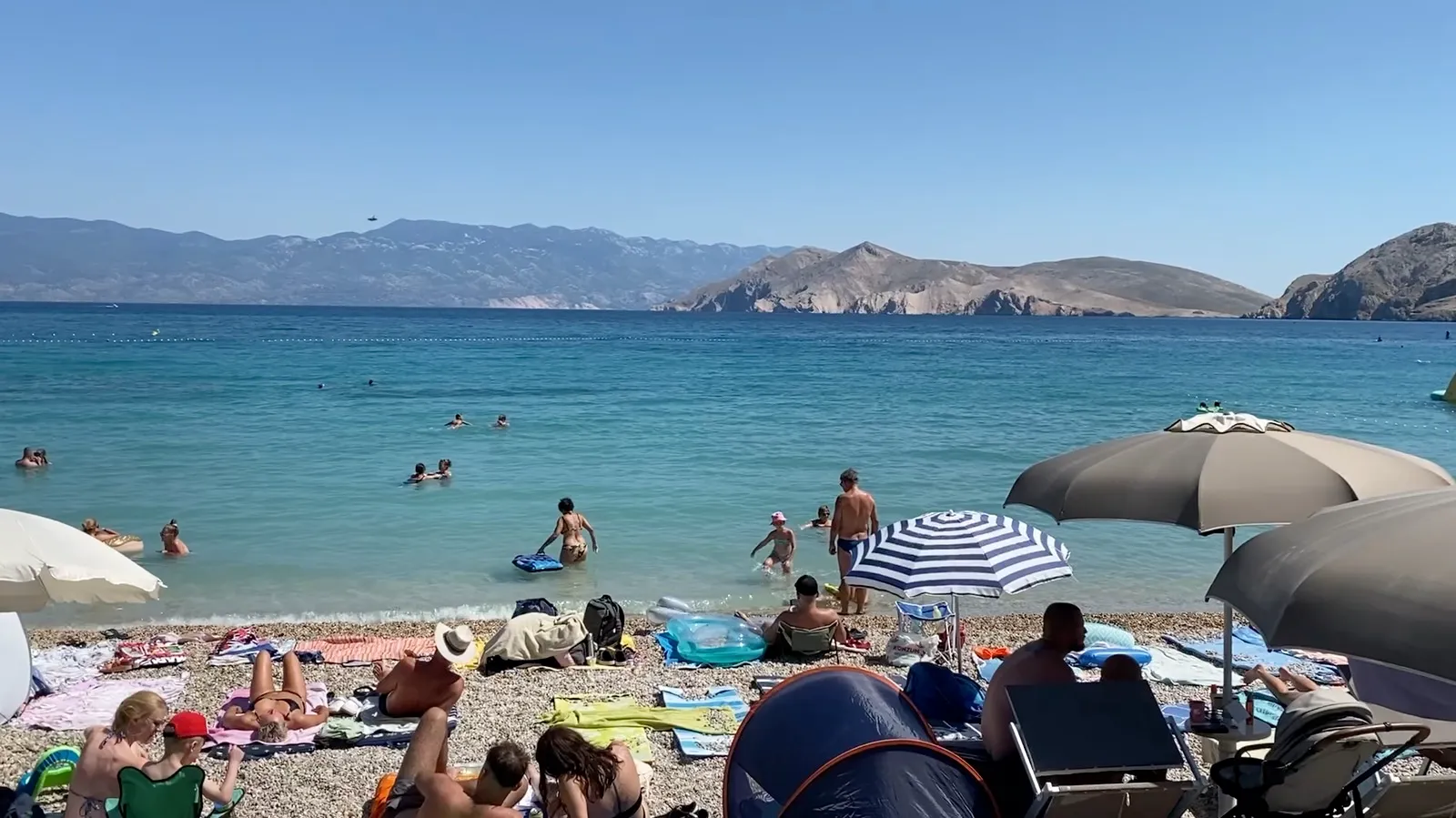
The busiest summer weeks are the larger challenge. Our own video shows a dense line of towels and many swimmers in the water. Arriving early gives you a better choice of position and reduces the time spent carrying beach equipment from a distant parking area.
Before settling down, check the exact section for depth, waves, shade and nearby facilities. Do not assume that showers, toilets, lifeguards or accessible equipment are present at every point along the 1.8-kilometre curve.
The bay and its dramatic landscape
Baška’s landscape is as important as the beach itself. From above, the town appears tucked between the sea and a steep bowl of karst hills. The pale, sparsely vegetated slopes contrast with the deep blue water, while the islands and the Velebit coast form a layered horizon beyond the bay.
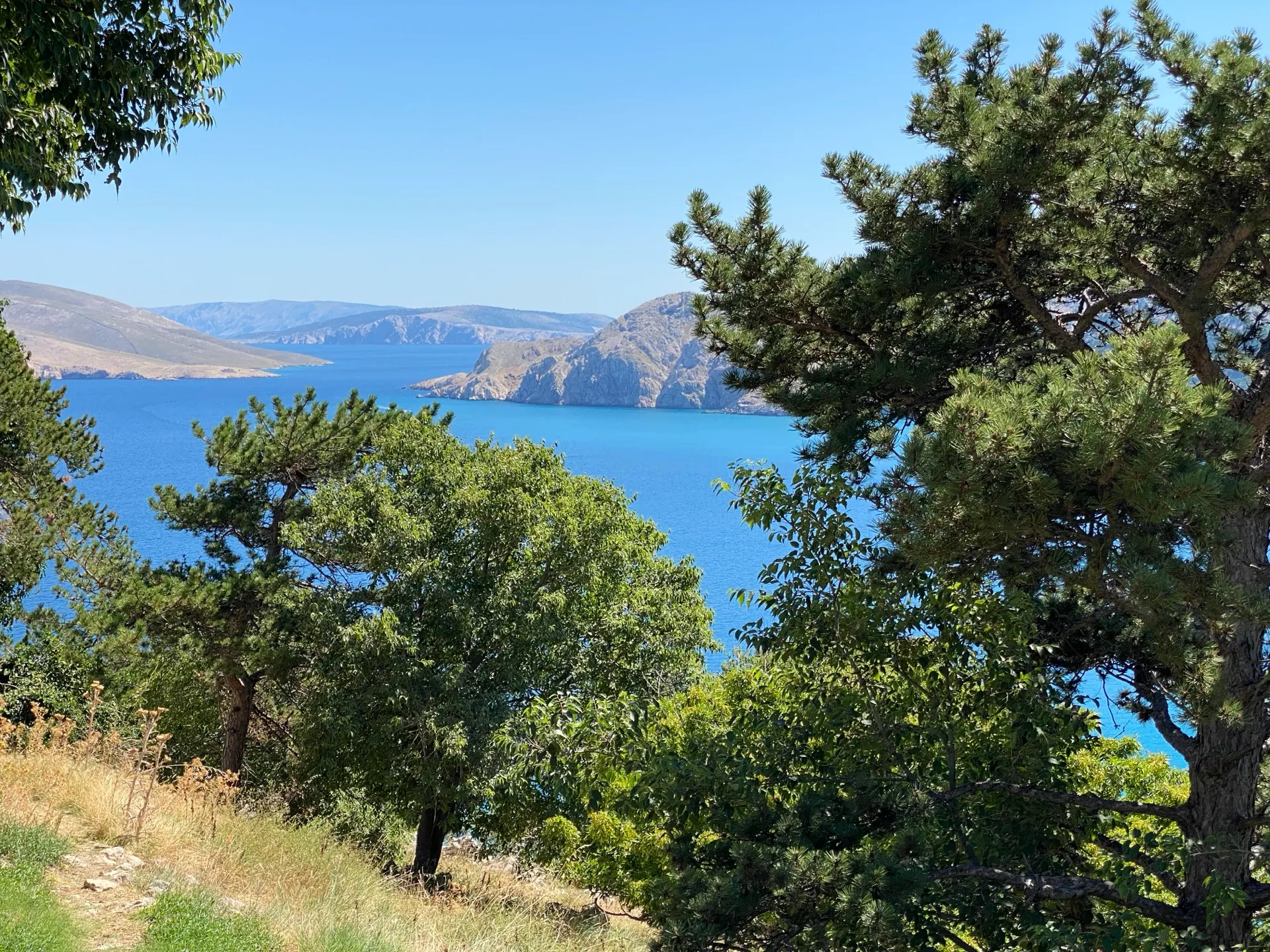
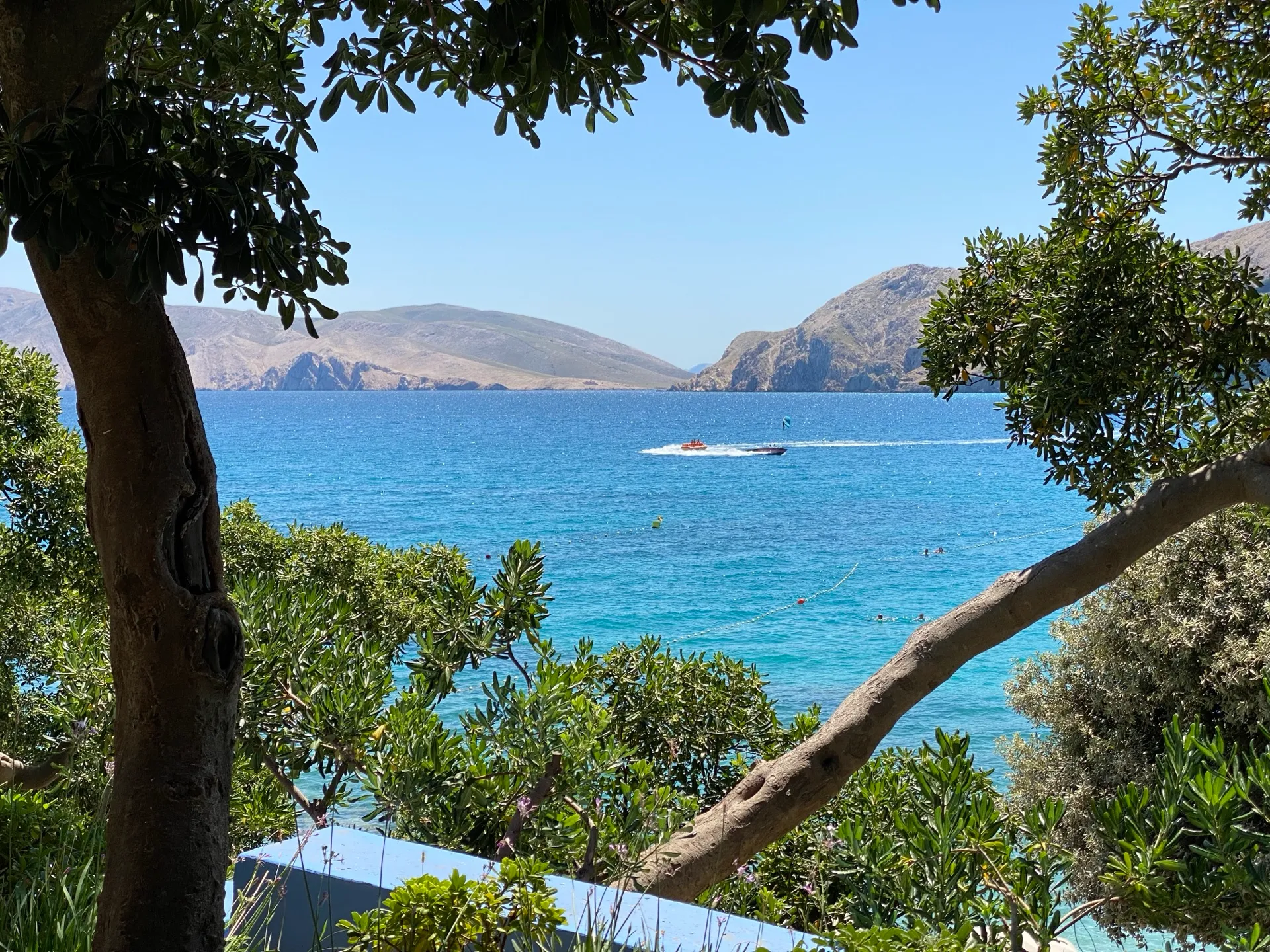
This geography explains why the same place can work for two very different types of holiday. At sea level, Baška is an easy summer resort. A short distance uphill, it becomes a walking and viewpoint destination with exposed rock, dry-stone landscapes and long coastal views.
Wind and heat deserve respect. The Kvarner region can experience strong bura, and the open slopes offer little protection from midday sun. Check the forecast before swimming, boating or hiking, and do not judge conditions from a calm photograph taken on another day.
Old Baška and the waterfront
Move away from the widest part of the beach and Baška becomes more intimate. The older streets are narrow and stone-paved, with steps, shutters and small decorative details on the houses. This is not a large monumental old town, but it adds character and gives you a cooler, slower route away from the open beach.
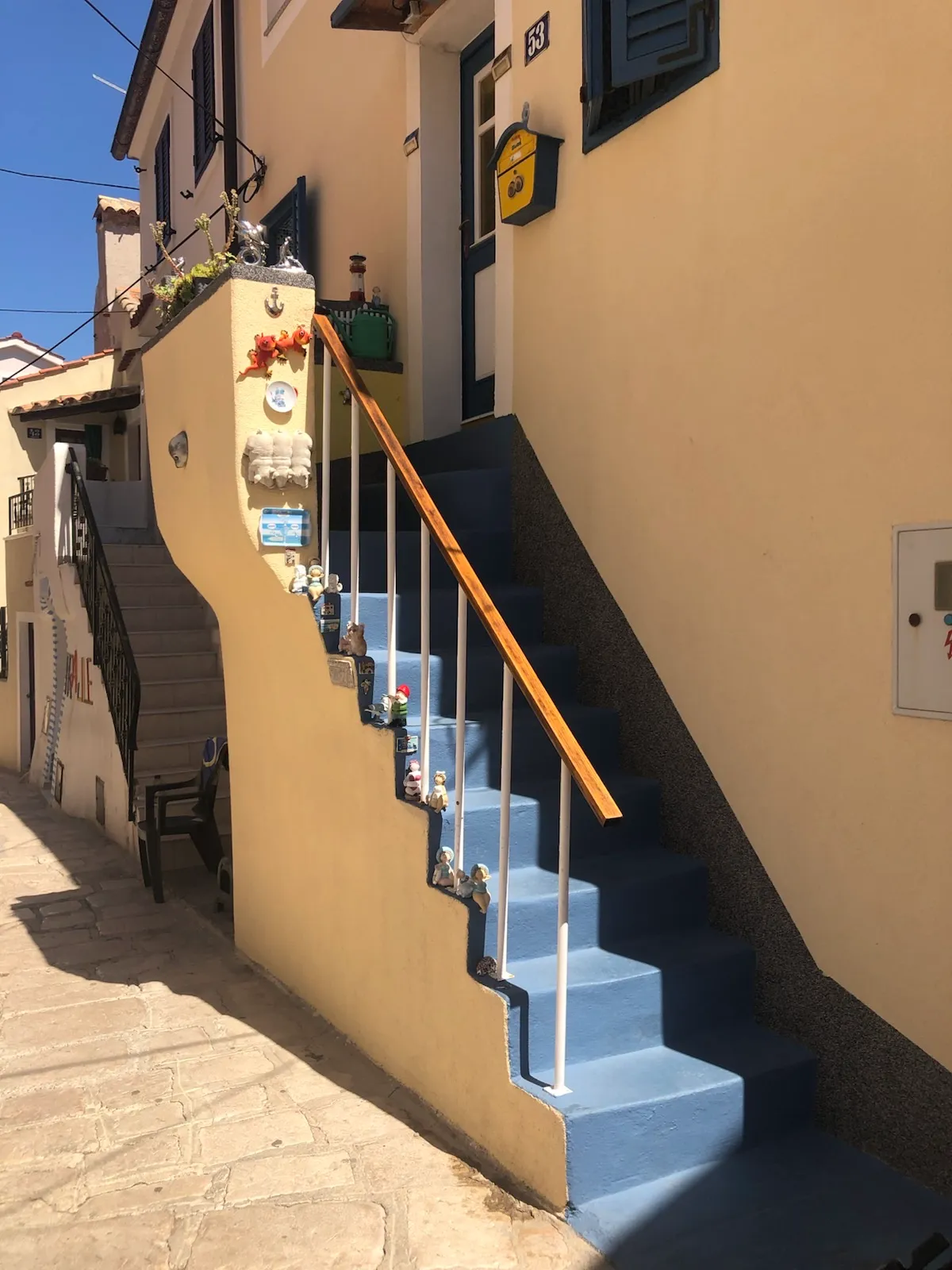
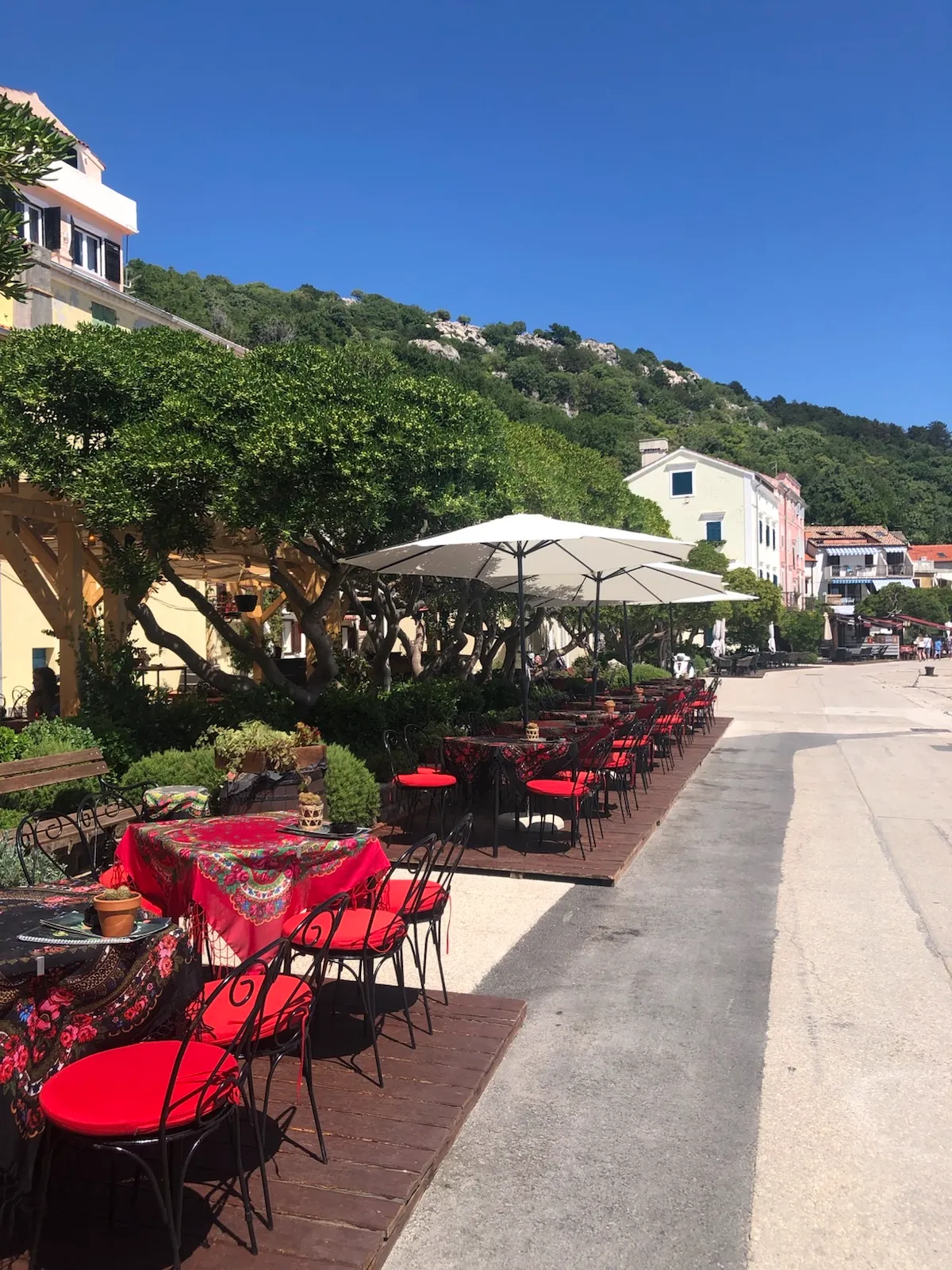
The waterfront brings the lanes back to the sea. Summer terraces line parts of the pedestrian route, and the harbour is filled with small boats. It is an easy area for a morning coffee or evening walk, when the temperature drops and the beach begins to empty.
Avoid choosing a restaurant only from an old photograph. Businesses, menus and opening periods change. Use the atmosphere shown in the image as orientation, then check current reviews and the menu on the day.
The harbour and boat trips
Baška’s small harbour is part of the town rather than a separate marina district. It is useful for a walk, photographs and finding current information about excursions or taxi boats.
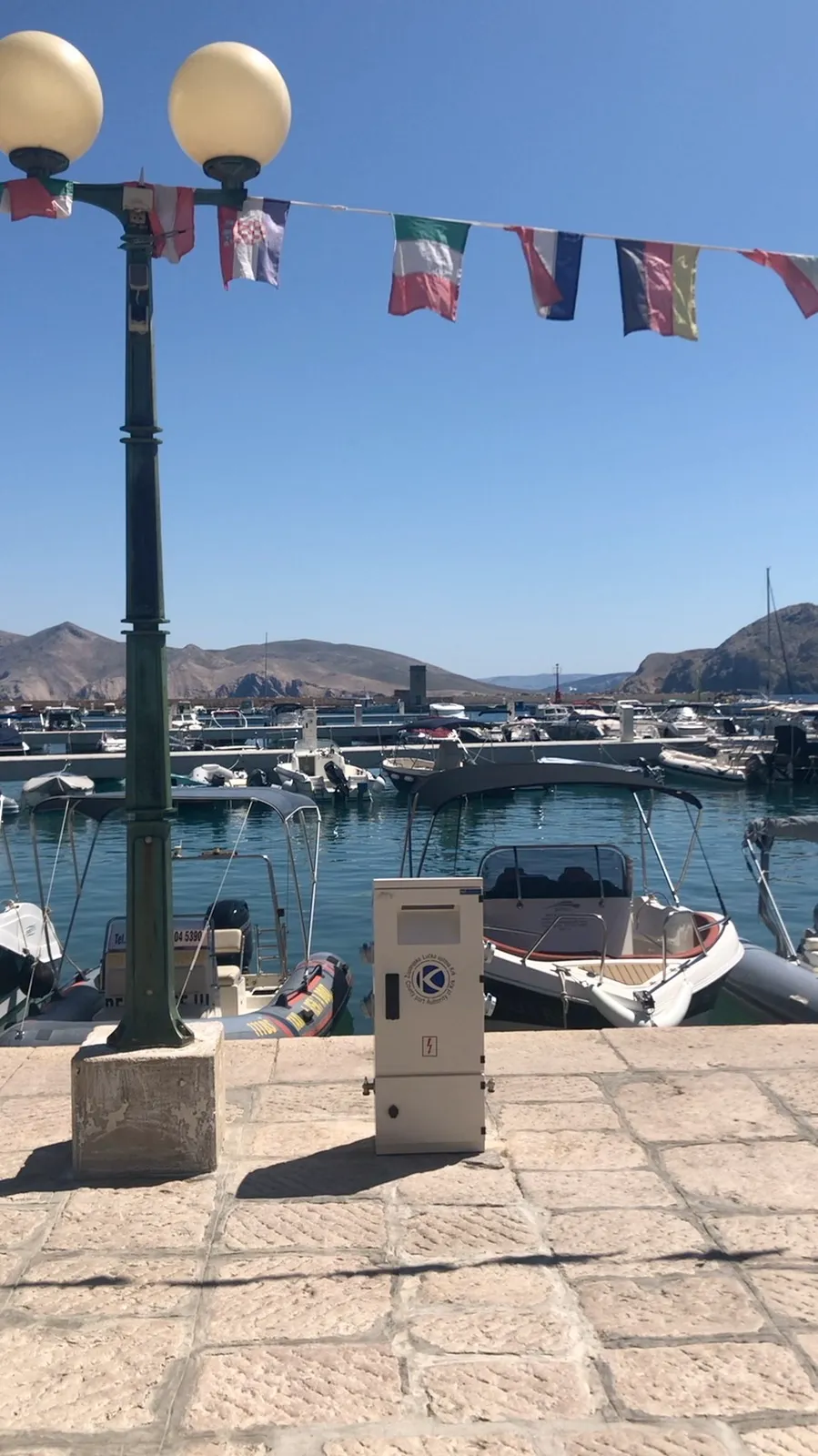
The official tourism site explains that the wider Baška area has around thirty pebble beaches. Some can be reached on foot, while others require a boat or taxi boat. Vela Luka and Mala Luka are among the better-known remote bays, but they should not be presented as extensions of Vela Plaža. They are separate destinations with their own access and conditions.
Confirm the return plan before boarding any taxi boat. Routes, prices, weather limits and last departures are seasonal. A remote cove may have little shade and limited services, so take water, sun protection and suitable footwear.
Walking and viewpoints around Baška
The official tourist board promotes more than 90 kilometres of marked trails in the Baška area. One of the best-known is the 7.5-kilometre Path to the Moon, which leads from a wooded section towards an exposed stone plateau.
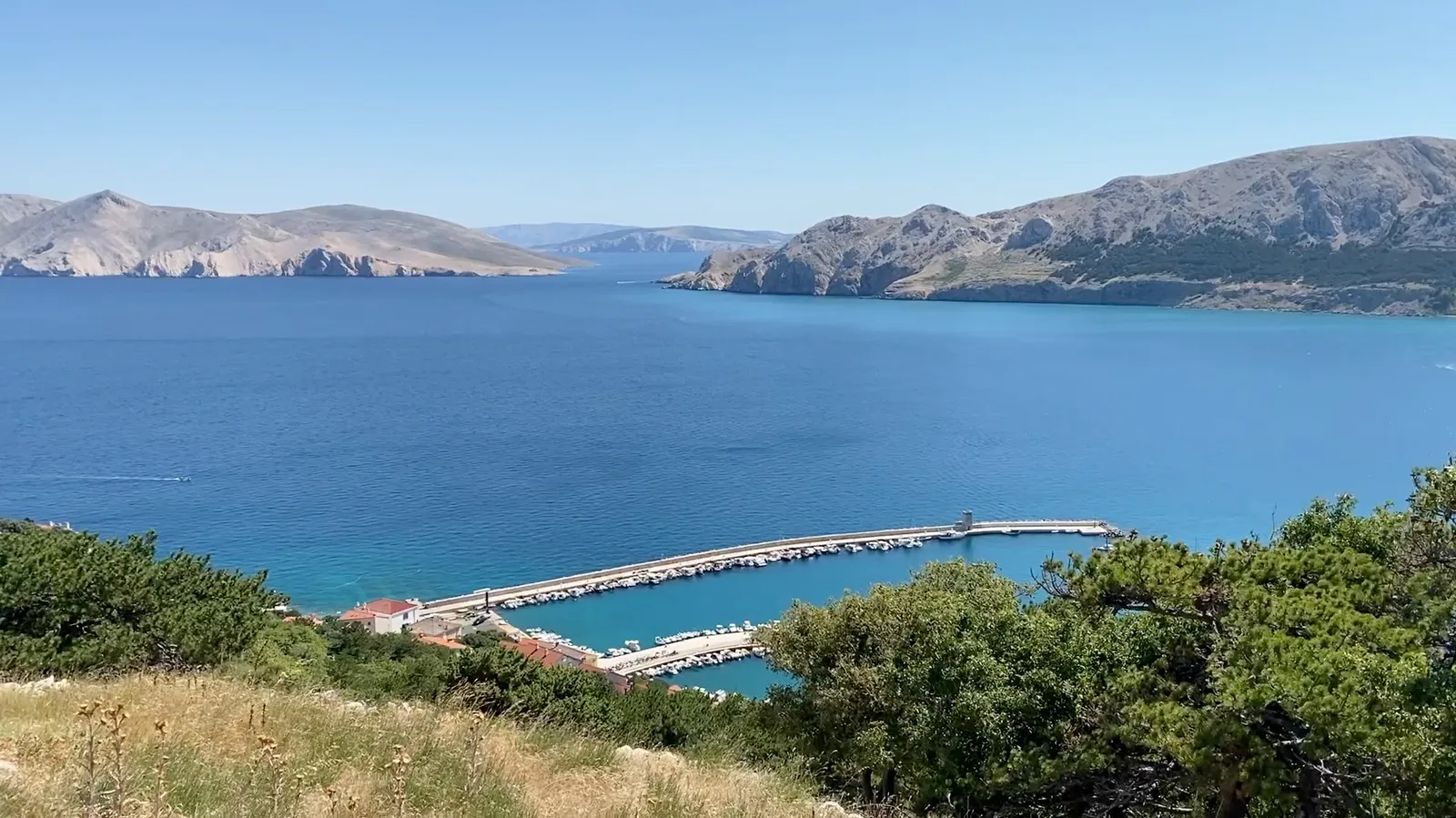
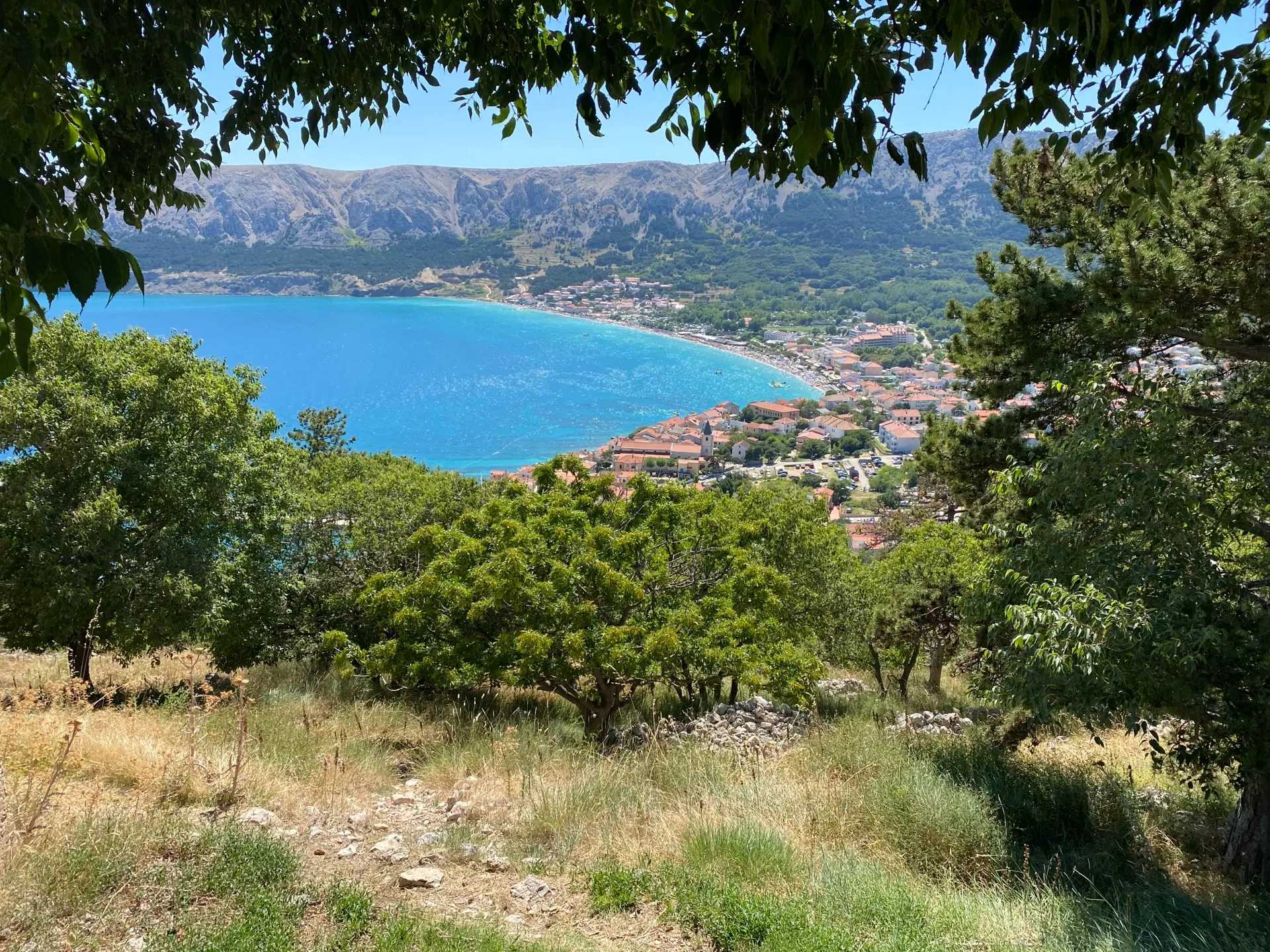
Our photographs show excellent upper views of the town, beach and harbour, but the exact shooting point has not yet been verified. For that reason, this guide does not label the panorama as a particular church or named viewpoint. Follow current signs and an official trail map rather than trying to reproduce an unconfirmed photo location.
For any walk above town:
- start early in warm weather;
- use shoes with grip rather than beach sandals;
- carry more water than you expect to need;
- stay on marked routes;
- turn back if strong wind, heat or poor visibility changes the conditions.
Outdoor Baška is a real part of the destination, not merely a backdrop, but it requires different preparation from a promenade stroll.
Baška Tablet and St Lucy’s Church
Baška also has one of Croatia’s most important cultural associations. A replica of the Baška Tablet is displayed in the Church of St Lucy in nearby Jurandvor. Official local material dates the stone inscription to around 1100 and explains that the original was moved to Zagreb for preservation.
The church and tablet are not shown in our current photo set, so they should be treated as a separate cultural stop rather than illustrated with a generic old-town image. Check current visiting hours before going; access can be more limited than at an open-air attraction.
If you have only one beach day, the town and Vela Plaža are enough. If Croatian history, Glagolitic script or medieval heritage interests you, add Jurandvor and allow extra time rather than trying to squeeze it into a hurried swim stop.
Parking in Baška
Parking is the practical issue most likely to shape a summer visit. Baška uses several paid zones, and the official tourism site publishes current locations, charging periods and methods. The details are seasonal, so a price copied into an evergreen article would quickly become unreliable.
Use the official parking page shortly before your trip, then read the sign at the exact car park. Confirm:
- the zone and paid hours;
- whether payment is hourly or daily;
- the accepted machine, card, SMS or app method;
- whether your vehicle type has separate rules;
- the walking route back to the beach.
In July and August, arrive early. A space that looks close on a map may still involve a sunny walk, and circulating through narrow streets wastes time. Never rely on informal roadside parking or block local access.
Arriving without a car
The official trip-planning page lists daily bus connections towards Baška and places Rijeka Airport on Krk Island, roughly 40 kilometres away. Schedules and connections change, so use the operator’s current timetable rather than an old tourism screenshot.
Once in Baška, the main beach, waterfront and older centre can be explored on foot. A bus-based day trip is therefore realistic if the arrival and departure times leave a useful window. Remote coves, hill trails and visits elsewhere on Krk require more planning.
When to visit Baška
July and August deliver warm-sea beach conditions and the fullest range of seasonal services. They also bring the largest crowds, the hardest parking and the least choice of beach space.
June and September are usually the most balanced months for visitors who want swimming with a calmer promenade and easier parking. Services may operate on a reduced schedule at the edges of the season.
Spring and autumn suit walking, viewpoints and cultural visits better than a classic beach holiday. Weather can change quickly, and the exposed terrain should not be treated casually outside summer.
Whatever the month, check wind, heat and sea conditions on the day.
A practical one-day plan
Arrive early and park legally before the main beach traffic builds. Begin with Vela Plaža while the sun is lower and you still have a choice of position. Swim, then walk along the waterfront towards the harbour and older lanes.
Take a lunch or coffee break away from the strongest heat. In the late afternoon, choose either a short signed viewpoint walk or more time by the sea. Do not combine a demanding exposed hike with a midday beach schedule unless you are properly equipped.
Finish at the harbour or promenade. The changing light on the bay and surrounding rock is one of Baška’s strongest visual experiences, and the evening atmosphere is more relaxed than the middle of a busy beach day.
Honest verdict
Baška is one of the strongest all-round destinations on Krk for travellers who want a famous beach and a landscape that feels genuinely distinctive. Vela Plaža is convenient, clear-watered and impressive in scale; the town adds walking, food and a small harbour; the hills open the door to a completely different outdoor experience.
The compromise is popularity. Peak-season crowds, exposed sun and competitive parking are not minor details. Arrive early, choose your exact beach section rather than relying on the general name, and verify temporary services locally.
With those expectations, Baška works equally well as a memorable day trip or a beach base for several days on southern Krk.
Frequently asked questions
Is Baška beach sandy or pebbly?
Vela Plaža is primarily a pebble beach. Pebble size and water entry can vary along its length, so water shoes may be useful.
How long is Vela Plaža?
The official Baška Tourist Board gives a length of 1.8 kilometres.
Is Baška good for children?
It can be a good family choice because the main beach is central and supported by seasonal services. Check the exact water entry, shade and facilities before choosing your position.
Is Baška crowded?
Yes, particularly in July and August. Our own summer footage shows a busy beach and many swimmers. Earlier arrival or travel in June or September gives you more space.
Do I need a car in Baška?
Not for the beach, harbour and old centre once you have arrived. A car is useful for exploring the rest of Krk, but parking requires planning in summer.
Can I hike from Baška?
Yes. The area has an extensive marked trail network, including the Path to the Moon. Use current maps, proper footwear and enough water, and avoid exposed routes in extreme heat or strong wind.
Last updated: 10 August 2026.