


The Valbiska–Merag ferry is one of the simplest ways to take a car from the island of Krk to the island of Cres. The crossing itself is short — Jadrolinija schedules about 25 minutes — but the experience can feel confusing on a first trip. Valbiska serves more than one island direction, vehicles wait in live queues, and a ticket does not reserve a place on a particular departure.
This first-hand guide explains the whole process: choosing the correct lane, buying tickets, allowing enough time in summer, boarding with a vehicle and continuing from Merag. It also clears up one important point. This ferry lands on Cres, not Lošinj. Drivers going to Lošinj continue by road across Cres and over the bridge at Osor.
Where the ferry goes
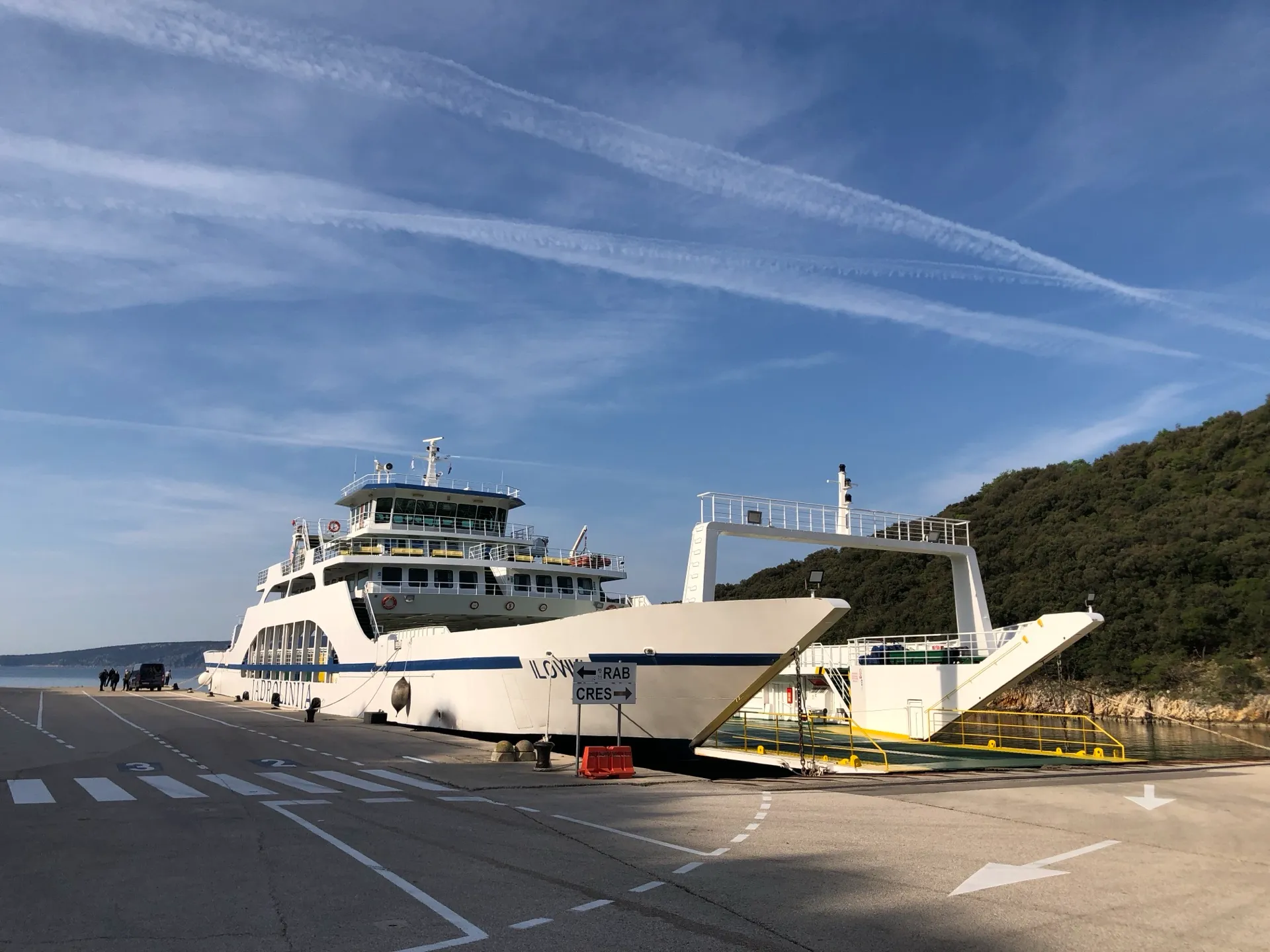
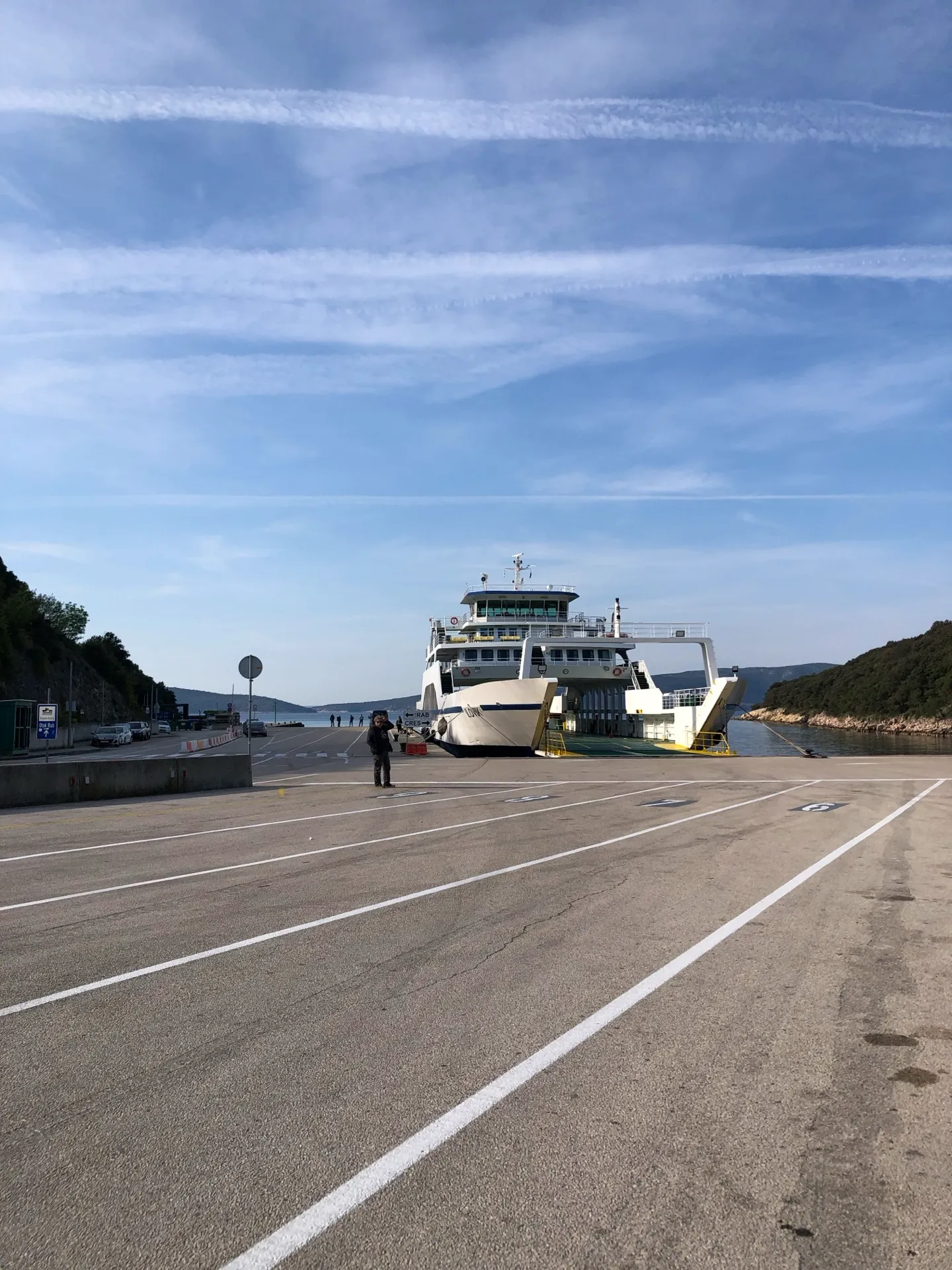
Jadrolinija route 332 connects Valbiska on Krk with Merag on Cres. Valbiska is on the western side of Krk, while Merag is a small ferry port on the eastern coast of Cres.
The route is useful for anyone travelling to Cres town, villages across Cres or onward to Lošinj. It avoids returning to the mainland and using the Brestova–Porozina crossing farther north.
Do not simply follow any sign marked “ferry” when you reach Valbiska. The port also handles the Valbiska–Lopar service to Rab. Our photographs show the road split clearly marked for Rab and Cres. Follow the signs for Cres or Merag, then join the corresponding vehicle queue.
Is a reservation required?
Valbiska–Merag is a non-reservation local ferry line. You buy a ticket for the route and date, but not a guaranteed space on one specific sailing. Boarding depends on the vessel’s capacity and the order in which vehicles arrive.
This distinction matters. Buying online can save time at the ticket office, but it does not let you bypass the vehicle queue. If the ferry fills before your car is loaded, you wait for the next available sailing.
The separate Valbiska–Lopar route operates differently and should not be used as a guide to the Cres crossing. Always check that the route, direction and date on your ticket are correct.
When to arrive
For local lines without reservations, Jadrolinija advises arriving at the port one to two hours before the desired departure. The company also notes that an even earlier arrival may be necessary during the tourist season.
In practice, the right margin depends on the day. July and August weekends, holiday changeover days and popular morning departures can produce long queues. Arriving early is more comfortable than planning around the final possible crossing of the day.
Use the official live schedule for your travel date rather than an old screenshot or a timetable copied by a travel blog. Extra sailings may be added in summer, while weather or operational changes can alter the plan.
A sensible high-season routine is:
- check the schedule and traffic conditions before leaving;
- reach Valbiska at least one to two hours before the sailing you hope to use;
- follow the Cres/Merag signs and join the correct line;
- buy or prepare the ticket while keeping the vehicle ready to move;
- accept that boarding may be on a later ferry if demand is high.
Tickets and vehicle categories
The fare includes separate charges for passengers and the vehicle. The vehicle price depends on its category and dimensions, so a normal passenger car, a taller vehicle, a camper and a car with a trailer are not necessarily charged the same amount.
Check Jadrolinija’s current price list before the trip. We intentionally do not reproduce fixed prices here because they can change and because choosing the wrong vehicle category can make an apparently exact figure misleading.
Tickets can be bought through Jadrolinija’s official channels or at the port, subject to current availability of the sales point. On our trip, a ticket booth was located beside the waiting area. If purchasing online, save the ticket where it remains accessible even with weak mobile reception and make sure the screen can display the code clearly.
Count every traveller correctly, including children, and select the real vehicle category. If you are uncertain about a camper, roof load, trailer or vehicle dimensions, check with Jadrolinija before travel rather than guessing at the terminal.
What the queue at Valbiska is like
Valbiska is a functional vehicle terminal rather than a conventional town centre. Cars line up in marked lanes and wait until staff begin loading. The atmosphere is usually straightforward when drivers follow the signs and remain ready.
On our visit, the terminal area had a café and toilets. That makes an early arrival easier: after joining the queue, passengers can get coffee or use the facilities. However, do not leave the vehicle unattended when the line may begin moving. If travelling with another adult, take turns. If alone, ask staff whether there is enough time before walking away.
Keep the lane clear, do not create a second informal queue and do not assume that another row is moving towards the same island. Port workers may organise vehicles by size and available deck space, so loading order can look different from simple first-to-last movement even though arrival order remains important.
Boarding with a car
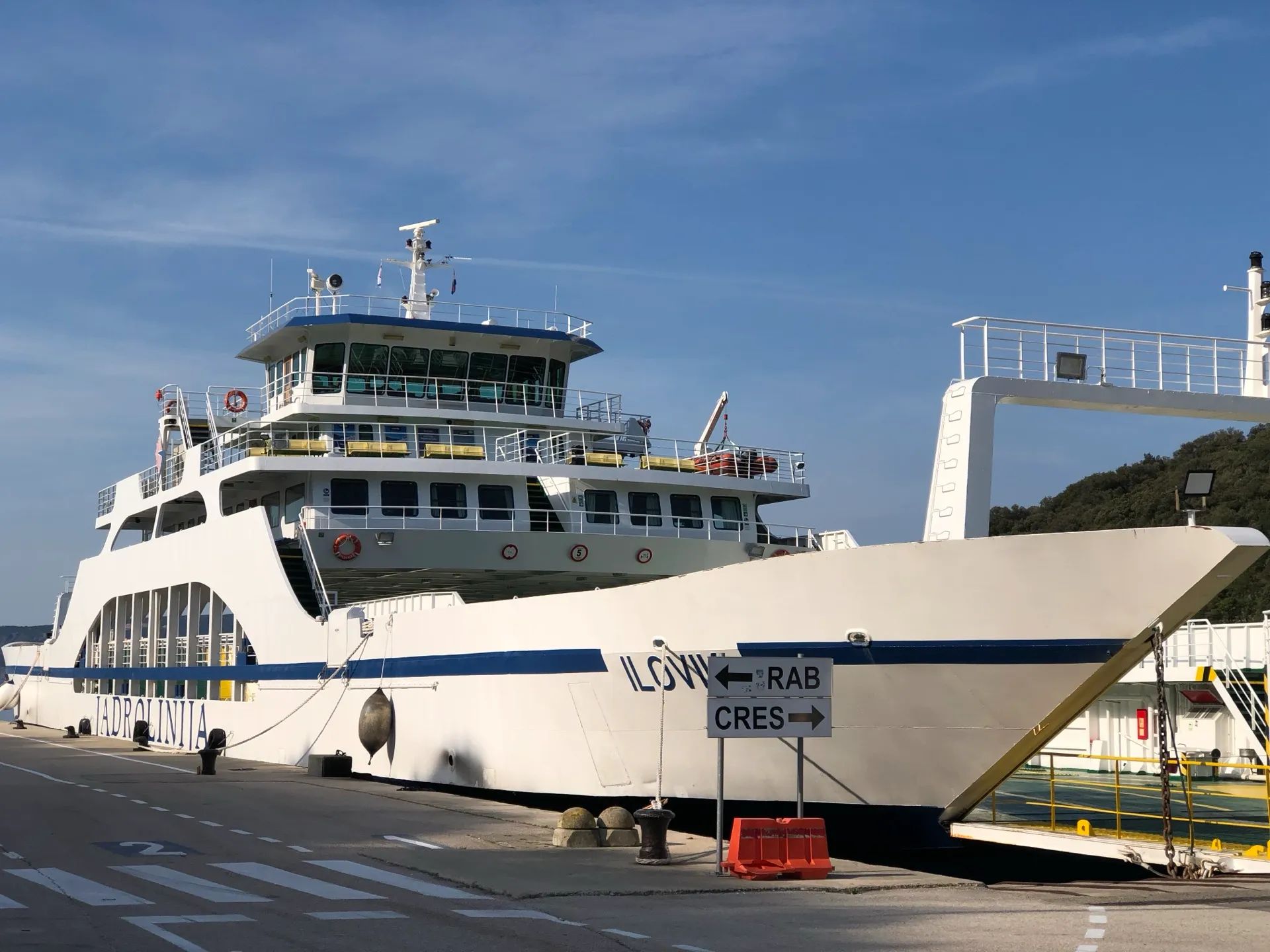
When loading begins, follow the crew’s hand signals and temporary lane instructions. Have the ticket ready for scanning. Drive slowly onto the ramp and stop exactly where directed on the vehicle deck. Ferries need to use space efficiently, so cars may be parked closer together than in an ordinary car park.
Secure the vehicle as instructed, engage the parking brake and make sure lights and electrical accessories are off. The crew’s directions and the signs on the assigned vessel take priority over generic advice.
Before leaving the car, take the items you may need during the crossing: phone, documents, medication, water and a layer for the open deck. Note where the vehicle is parked and which stairs you used. A short crossing is still long enough to make returning to the wrong side of the car deck inconvenient.
Keep children close on stairs and around doors. Drivers should not stop on the ramp to take photographs, and passengers should never enter working loading areas for a better angle.
The 25-minute crossing
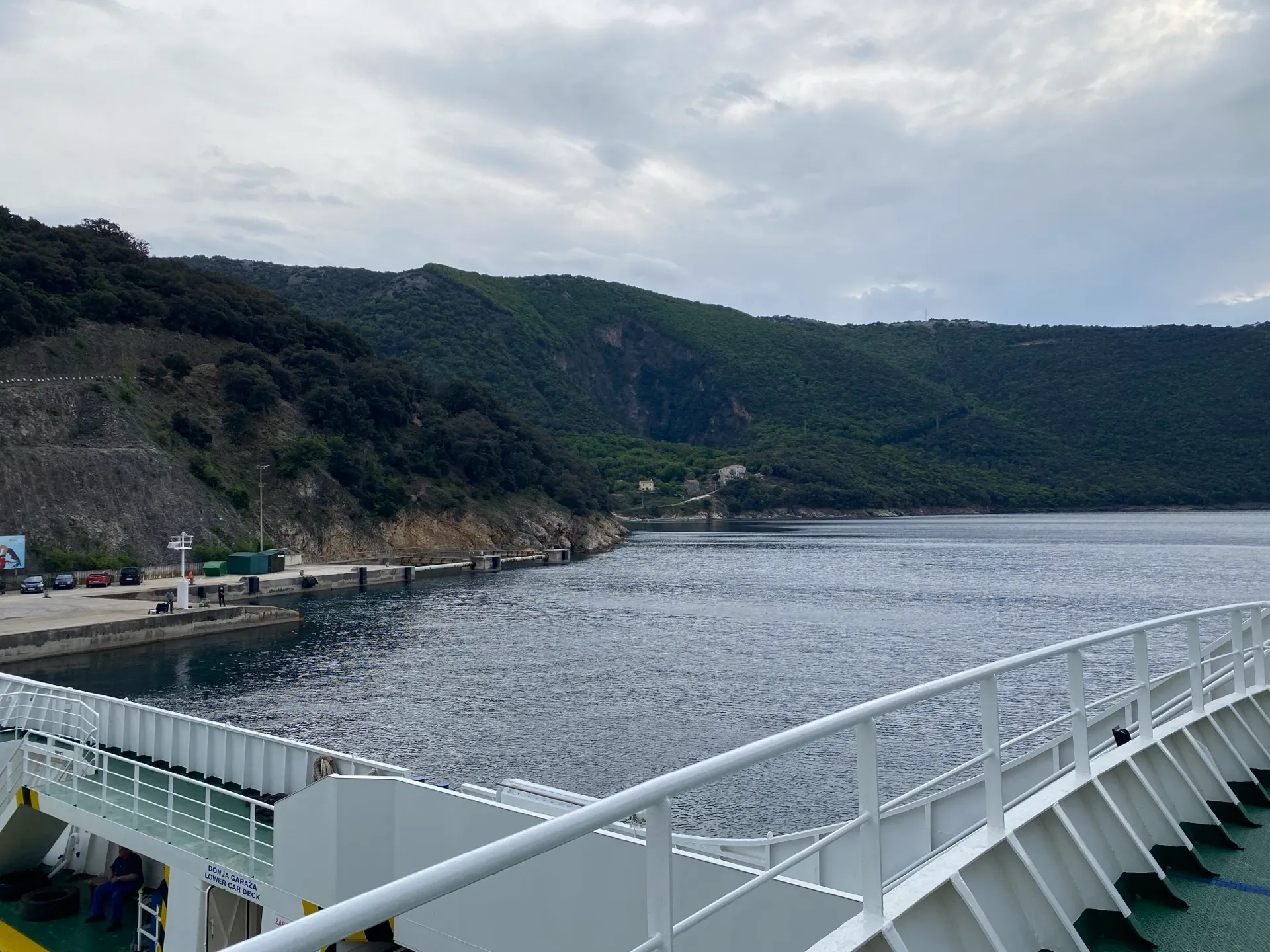
Once the car is parked, passengers can move to the permitted indoor or outdoor areas. On our crossing, there were toilets and a small buffet selling drinks and snacks. Facilities depend on the vessel assigned that day, so treat them as useful extras rather than guaranteed services.
The open deck gives the best views. Leaving Valbiska, the green shore of Krk recedes behind the ferry. Approaching Merag, the hills and small bay of Cres come into view. The crossing is scheduled for around 25 minutes, which is enough for coffee and photographs but short enough that you should listen for arrival announcements.
Wind can make the open deck feel much colder than the port, even on a sunny day. A light jacket is useful outside the hottest part of summer. Secure hats, phones and loose belongings, and respect any closed-deck signs in rough weather.
Weather and disruptions
The Kvarner region is exposed to strong winds, including the bura. Ferry schedules can change when conditions are unsafe. A sunny forecast at your accommodation does not guarantee normal operation at the port.
Check the official Jadrolinija service notices before setting out and again if the weather deteriorates. If the crossing is essential for a flight, reservation or long onward drive, avoid building a plan with no time buffer.
Travellers prone to motion sickness usually find a 25-minute crossing manageable, but conditions vary. Sit in a stable indoor area, look towards the horizon and keep any medication with you rather than in the car.
Arriving at Merag
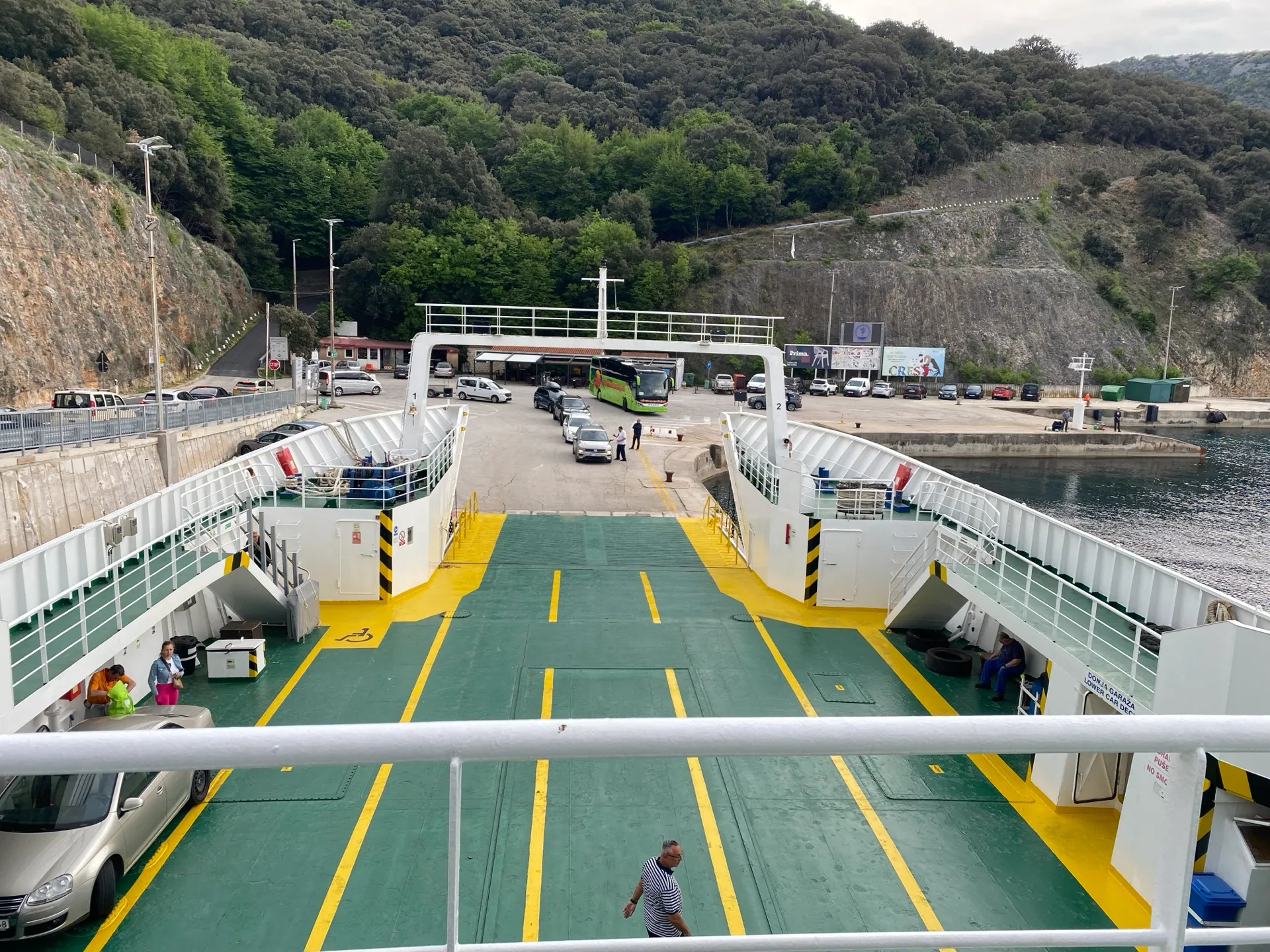
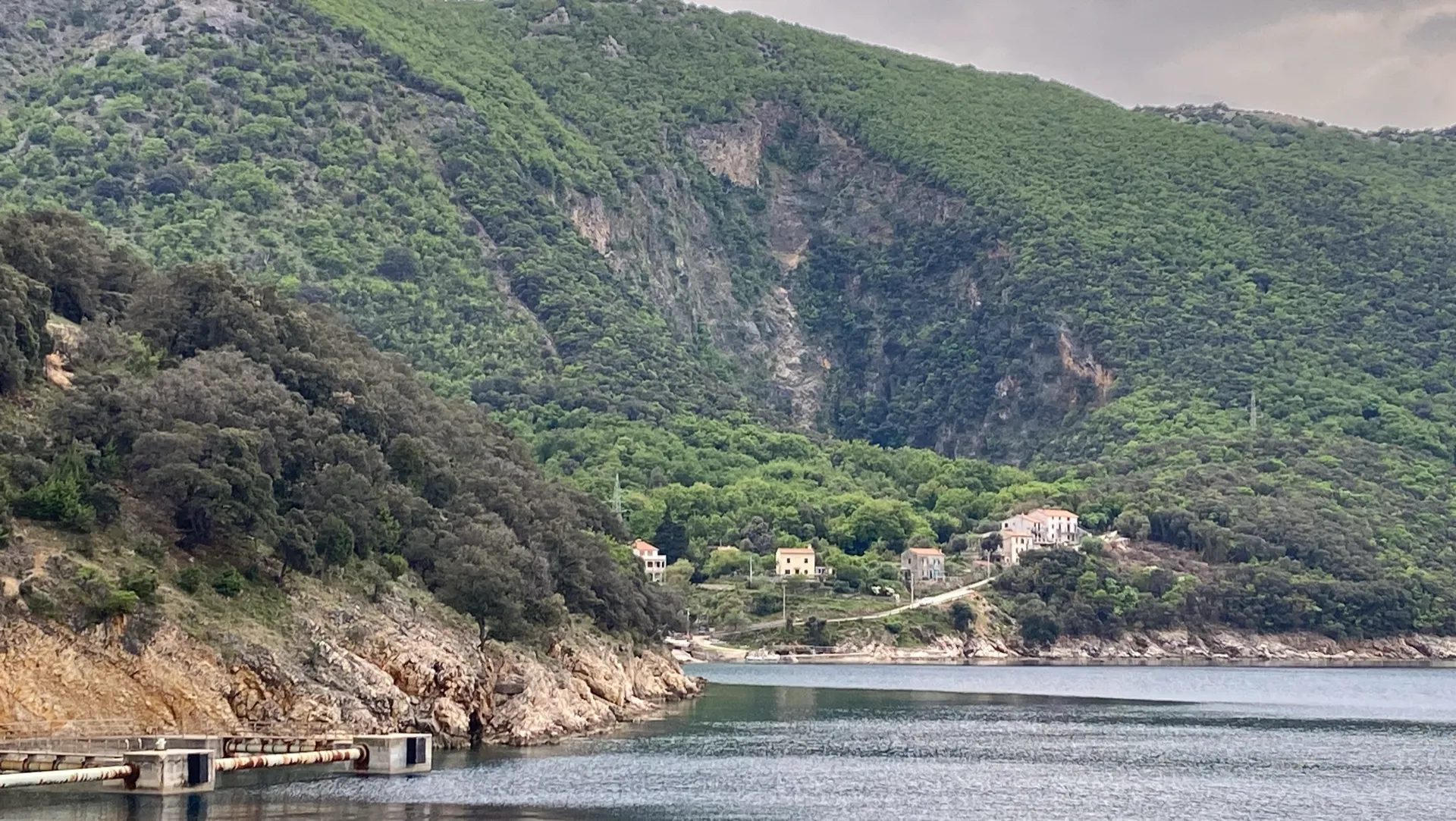
Return to the vehicle only when passengers are instructed to do so. Loading doors, ramps and moving cars make the vehicle deck a working area. Once the ferry is secured, follow the queue ashore and continue up the road from the port.
Merag is not a destination with a large range of services immediately beside the ramp. Plan fuel, food and other essentials before relying on the port area. The road climbs away from the coast and joins the island network towards Cres town and the south.
If your destination is Lošinj, continue by road across Cres towards Osor. The islands of Cres and Lošinj are linked there by a short bridge. Calling Valbiska–Merag a “ferry to Lošinj” is understandable in trip planning, but geographically and operationally it is a ferry to Cres followed by a substantial road journey.
Returning from Merag
The return crossing follows the same basic non-reservation principle. A valid ticket does not guarantee a chosen departure if the vehicle deck reaches capacity. Allow a generous margin, especially when many holidaymakers are leaving the islands at the same time.
Check the direction, date and latest schedule before driving into the terminal. Do not rely on the times you remember from the outward trip because service frequency can vary by day and season.
The terminal is compact, so arrive with the car organised, passengers accounted for and essentials accessible. If you must connect to another appointment after reaching Krk, choose an earlier sailing rather than treating the final possible ferry as a firm reservation.
Practical checklist
Before leaving for Valbiska or Merag:
- verify the current Jadrolinija timetable and service notices;
- confirm the correct route: Valbiska–Merag for Cres;
- check the current passenger and vehicle fares;
- select the correct vehicle category;
- save the ticket offline or know where to buy it;
- allow at least one to two hours before the preferred sailing in busy periods;
- carry water, medication and a windproof layer upstairs;
- keep the driver near the vehicle when the queue may move;
- plan fuel and the onward road route on Cres;
- leave extra time if continuing all the way to Lošinj.
Frequently asked questions
How long is the Valbiska–Merag ferry?
The scheduled crossing time is approximately 25 minutes. Boarding, waiting and unloading add extra time to the journey.
Does an online ticket guarantee a place?
No. This is a non-reservation line. The ticket is valid for the route and date, while boarding depends on capacity and arrival order.
How early should I arrive?
Jadrolinija recommends one to two hours for non-reservation lines and notes that more time may be needed in the tourist season. Busy summer days can justify an even larger buffer.
Is this the ferry to Lošinj?
It is the ferry from Krk to Cres. For Lošinj, drive south across Cres after landing and cross the bridge at Osor.
Are there toilets and food?
On our trip, Valbiska had a café and toilets, and the ferry had toilets and a small buffet. Check current availability because terminal and vessel services can change.
For another useful Kvarner base, see our guide to Novi Vinodolski.
Our verdict
The Valbiska–Merag crossing is short and easy once its queue system is understood. The two essentials are to choose the Cres lane and to remember that a ticket is not a reservation for a specific sailing.
Arrive with time to spare, follow the port staff and treat the ferry as the first stage of the road journey across Cres. With that preparation, the crossing becomes a scenic break between two island drives rather than a stressful bottleneck.
Last updated: 9 August 2026.
[…] Valbiska–Merag ferry: a practical driving guide […]