

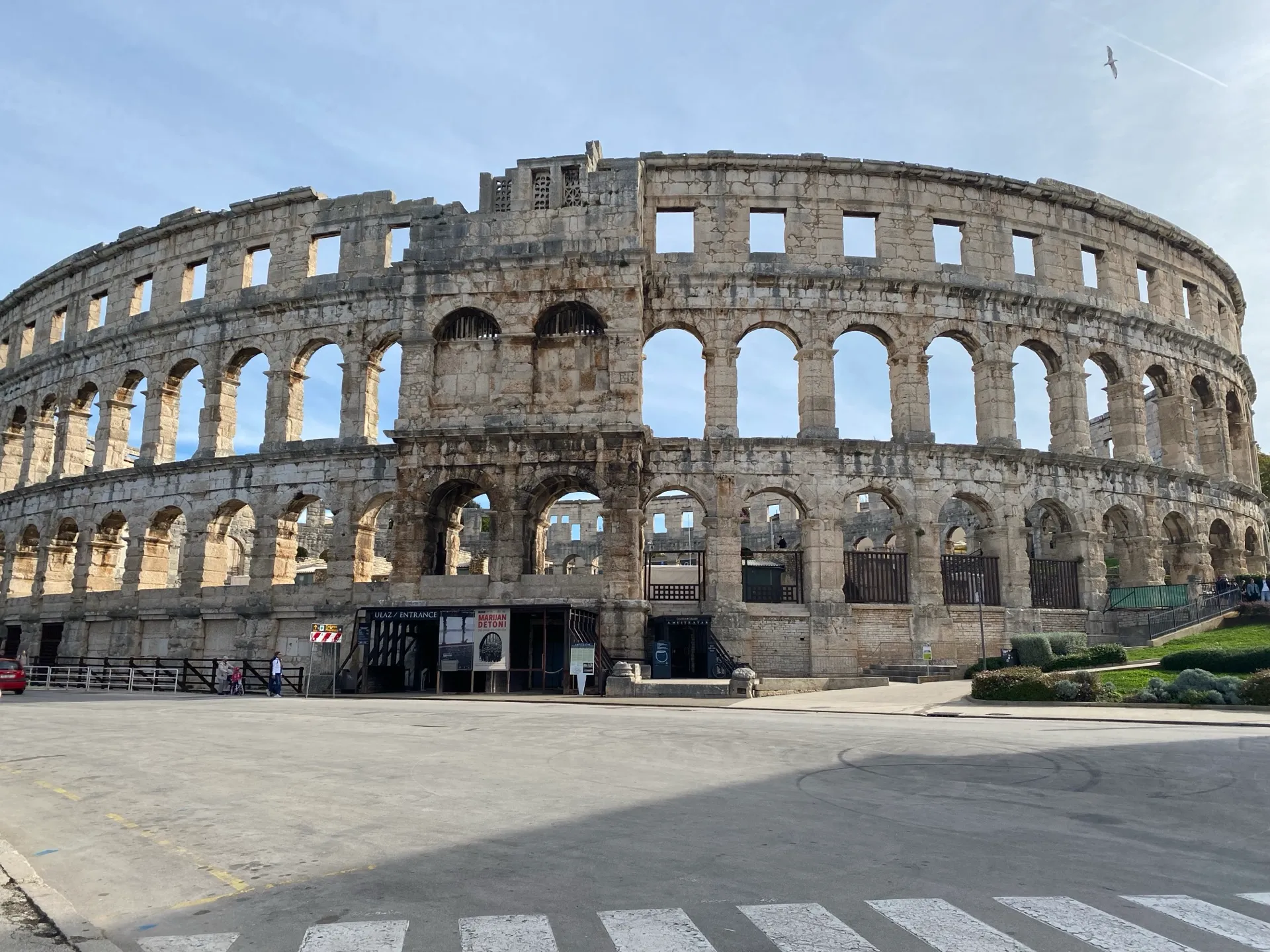

Pula Arena is the city’s unmistakable landmark: a first-century Roman amphitheatre whose high outer wall still rises above the harbour. You can appreciate the arches from the street for free, but the paid visit adds the arena floor, internal routes, stone seating, changing viewpoints and underground spaces. For most first-time visitors, it is worth entering.
Allow 45 to 90 minutes. A quick architectural walk fits into the lower end; photography, audio interpretation and the underground gallery push the visit toward the upper end. In summer, check the event schedule as carefully as the normal opening hours. Concerts, film screenings, sound checks and stage construction can shorten the day or change what is accessible.
Current tickets and hours
The following information was checked on the official Arena website on 10 August 2026:
- adult ticket: €10;
- children, pupils and students: €5;
- children under five: free;
- separate reductions are listed for visitors with disabilities and groups;
- the ticket office and last admission close one hour before the monument closes.
Regular seasonal hours listed by the Arena are:
- April: 08:00–20:00;
- May: 08:00–21:00;
- June–August: 08:00–22:00;
- September: 08:00–21:00;
- October: 09:00–19:00;
- November–March: 09:00–17:00.
These are not a promise for a specific date. Special events override the regular schedule, sometimes by many hours. Open the official “working hour changes” page on the morning of your visit and buy online if you want to reduce time at the ticket queue.
What makes Pula Arena special?
The amphitheatre was built in the first century, when Pula was the Roman colony Colonia Pietas Iulia Pola. The name “Arena” comes from the Latin harena, the sand that covered the central performance and fighting area.
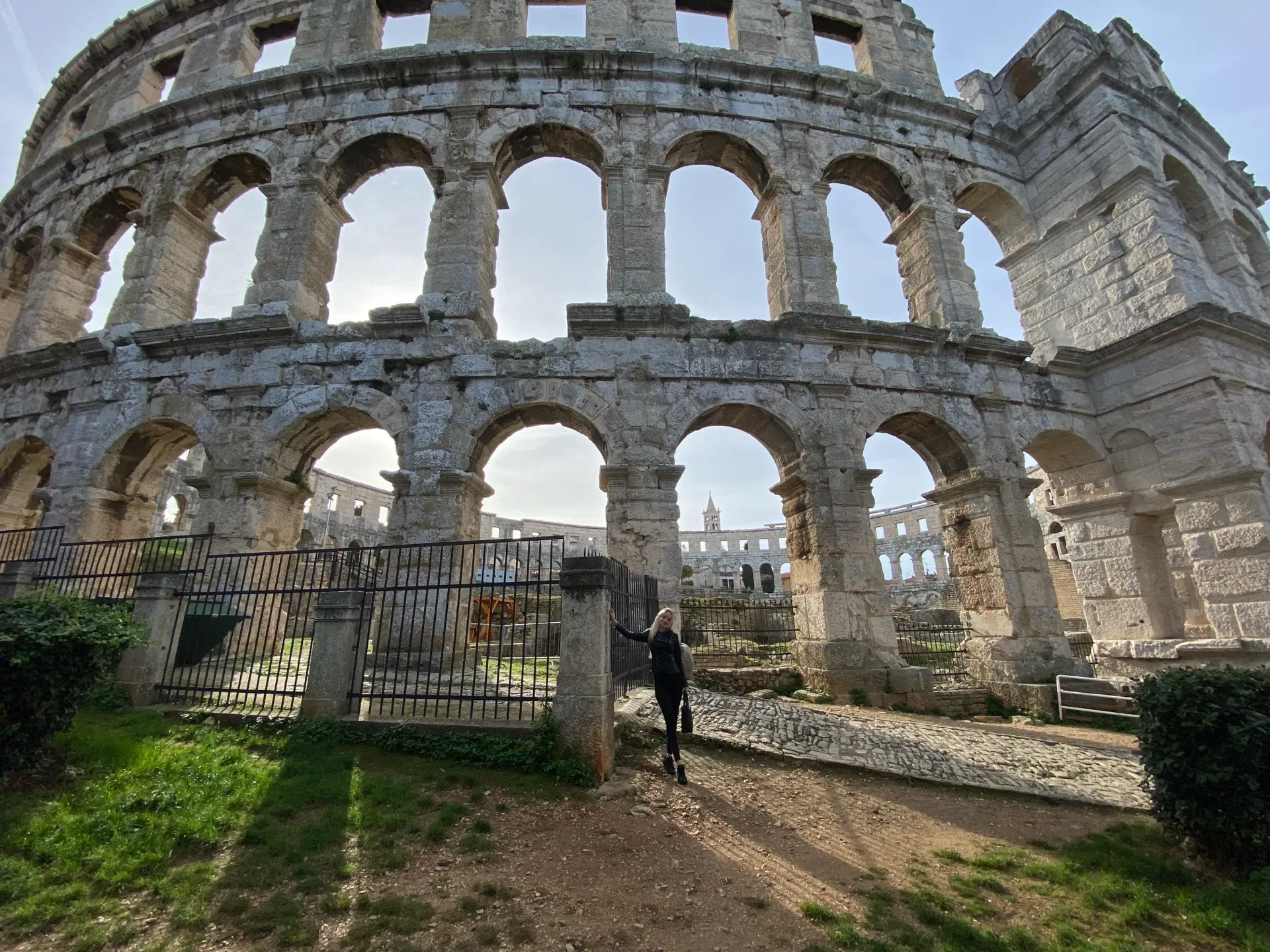
What survives is unusually legible. The repeated tiers of arches, almost complete outer wall and four side towers make the building understandable even before you enter. The harbour setting adds another layer: views through the stone openings connect the Roman monument to modern Pula and the Adriatic.
Today the Arena is not only an archaeological site. It is also an active cultural venue. The same interior can function as a visitor attraction during the day and a stage for concerts, the Pula Film Festival and other programmes. That living use creates atmosphere, but it also explains why opening hours sometimes change.
Is it enough to see the Arena from outside?
If you have only a few minutes or cannot manage the internal route, the exterior is still impressive. Walk around enough of the curved wall to see how its height changes with the terrain and to identify one of the projecting towers.
However, the street view cannot show the full oval, the relationship between the arena floor and seating, or the framed views through opposite arcades. Inside, the monument changes from a façade into a three-dimensional building.
The ticket is therefore most worthwhile for visitors interested in Roman engineering, architecture or photography. It is less essential only if your schedule is extremely tight or an event has restricted a large part of the interior.
Entering and reading the structure
Our recommended first stop is the arena floor. Stand near the edge rather than immediately walking to the highest accessible point. From below, the surviving wall and stacked arches show the scale most clearly.
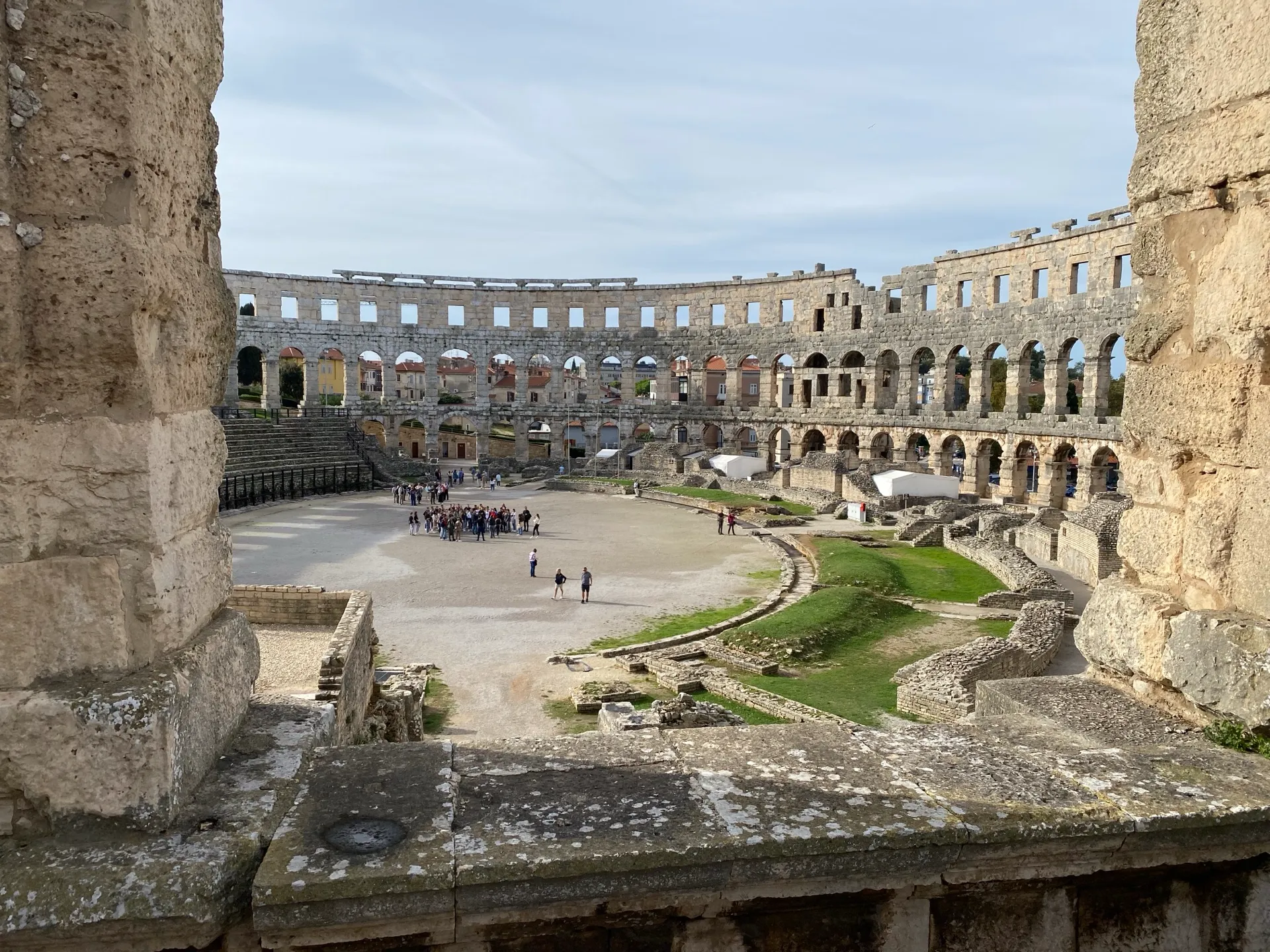
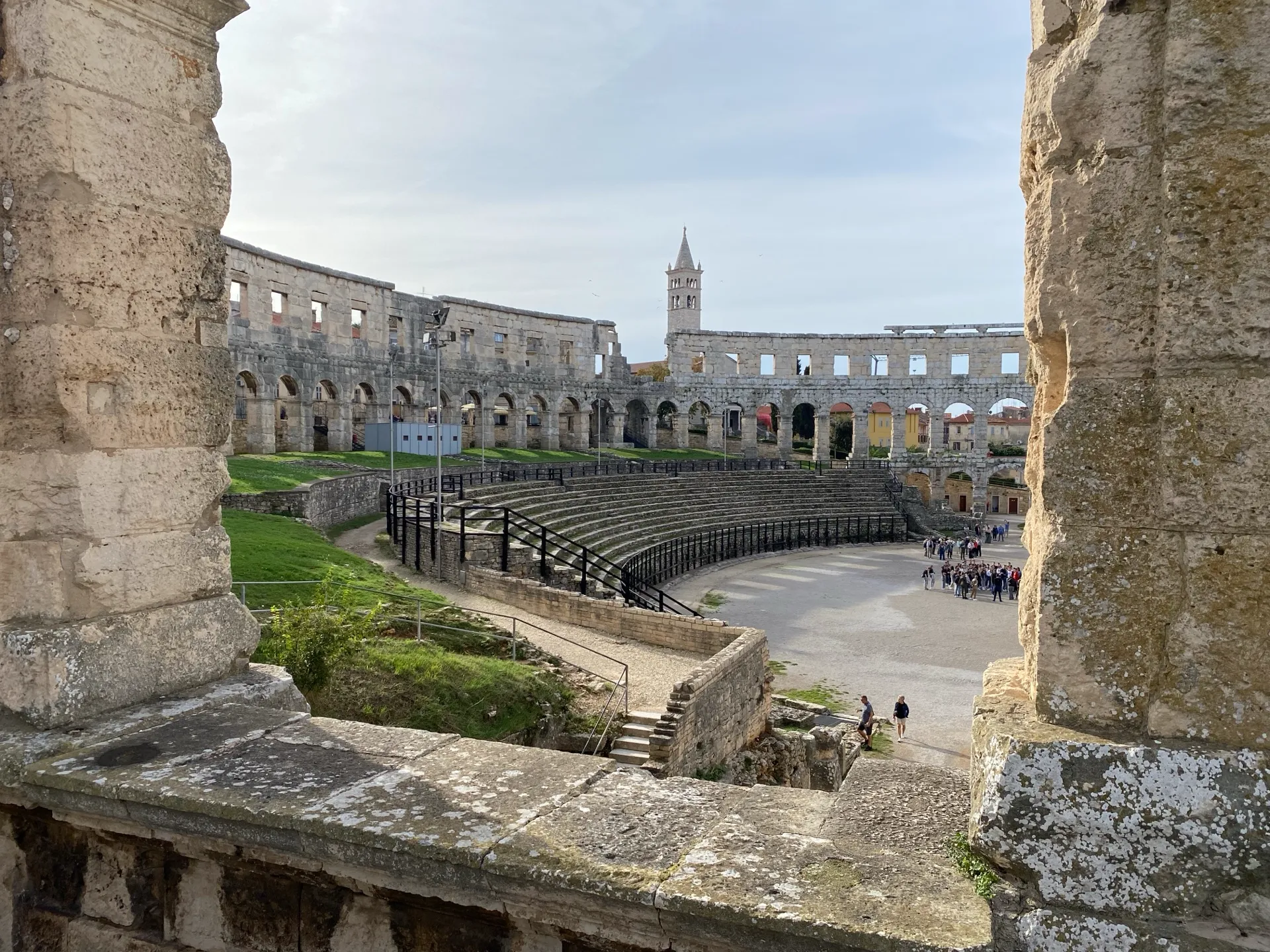
Then move around the perimeter and climb only where the visitor route allows. Different elevations reveal the curve of the seating, the foundations and the modern city visible through the openings. Do not climb on closed or raised ancient structures: the official rules prohibit it for both safety and conservation.
Our own photographs are strongest in this section. They show the broad arena, stone seating, exterior wall, city buildings and sea framed by arches. They do not document every room, and they were made on a relatively open day without a large event stage. Your visit may look different.
The underground gallery
The subterranean chambers are an important part of the normal visit. Official descriptions connect them with the practical machinery of the ancient amphitheatre and with exhibitions about Roman Istria, including olive-oil and wine production.
Access can change during special programmes. For example, the official site has published event-specific periods when the underground area operated differently or required arrangements. Check the current notice rather than assuming that a regular blog description applies.
Our photographs show the exterior and main arena. The underground gallery is not illustrated in this guide.
Best time to visit
For comfort, early morning is the most reliable choice in warm weather. The stone interior is exposed, shade is uneven and the arena floor can feel hot. Early entry also reduces the chance that a large tour group occupies the main viewpoints.
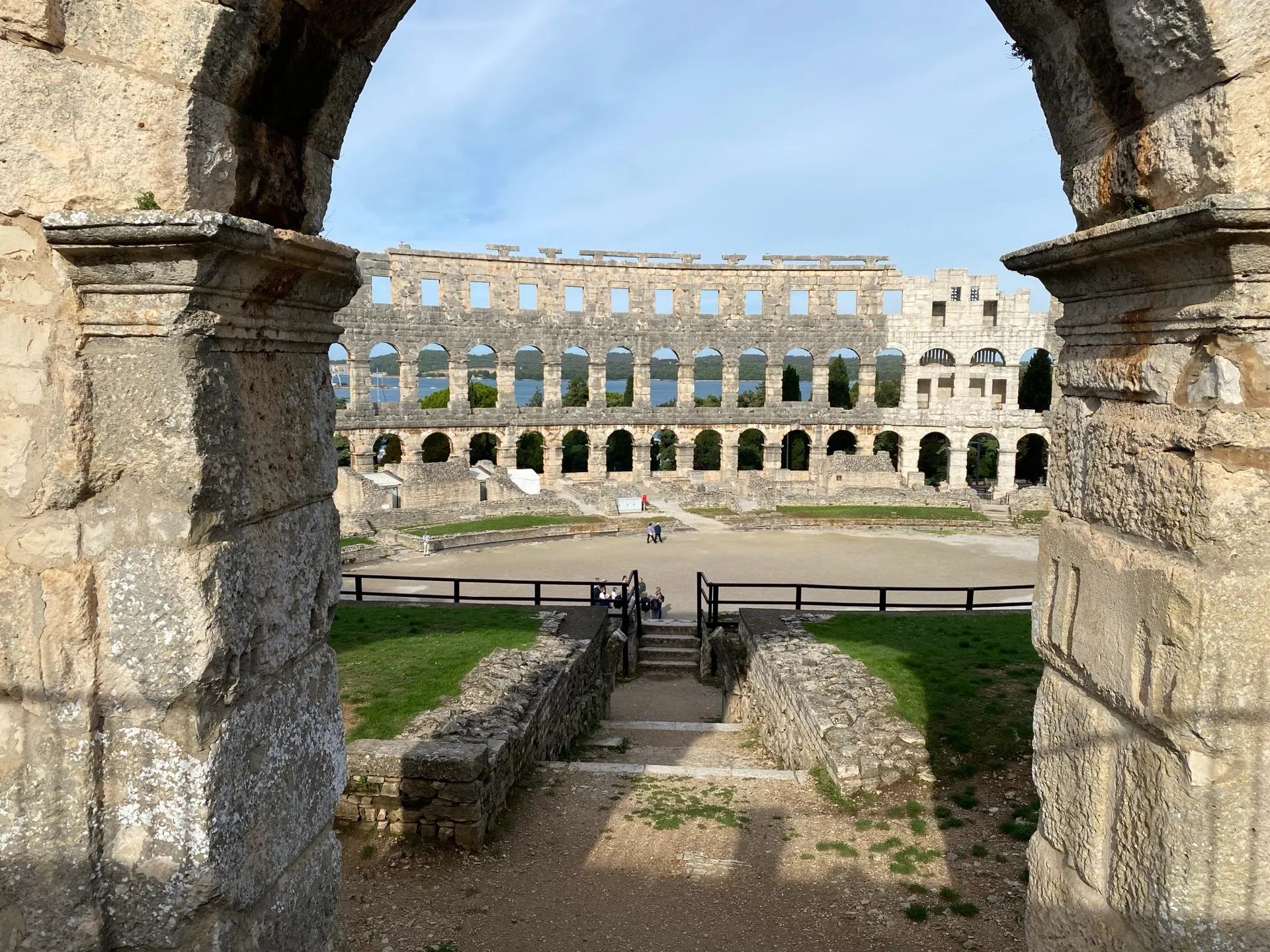
Late afternoon can produce warmer light on the limestone and attractive views through the arches. The trade-off is that summer events often require technical preparations later in the day. Sound checks, barriers or a stage do not mean the monument is “ruined,” but they change the archaeological experience and photography.
Always compare three things: the normal monthly hours, the special-event changes and the weather. The regular timetable alone is not enough.
Photography rules and useful angles
The official visitor rules permit photography in visitor areas. Flash is rarely useful outdoors, and drones are a separate matter that should never be assumed from normal camera permission.
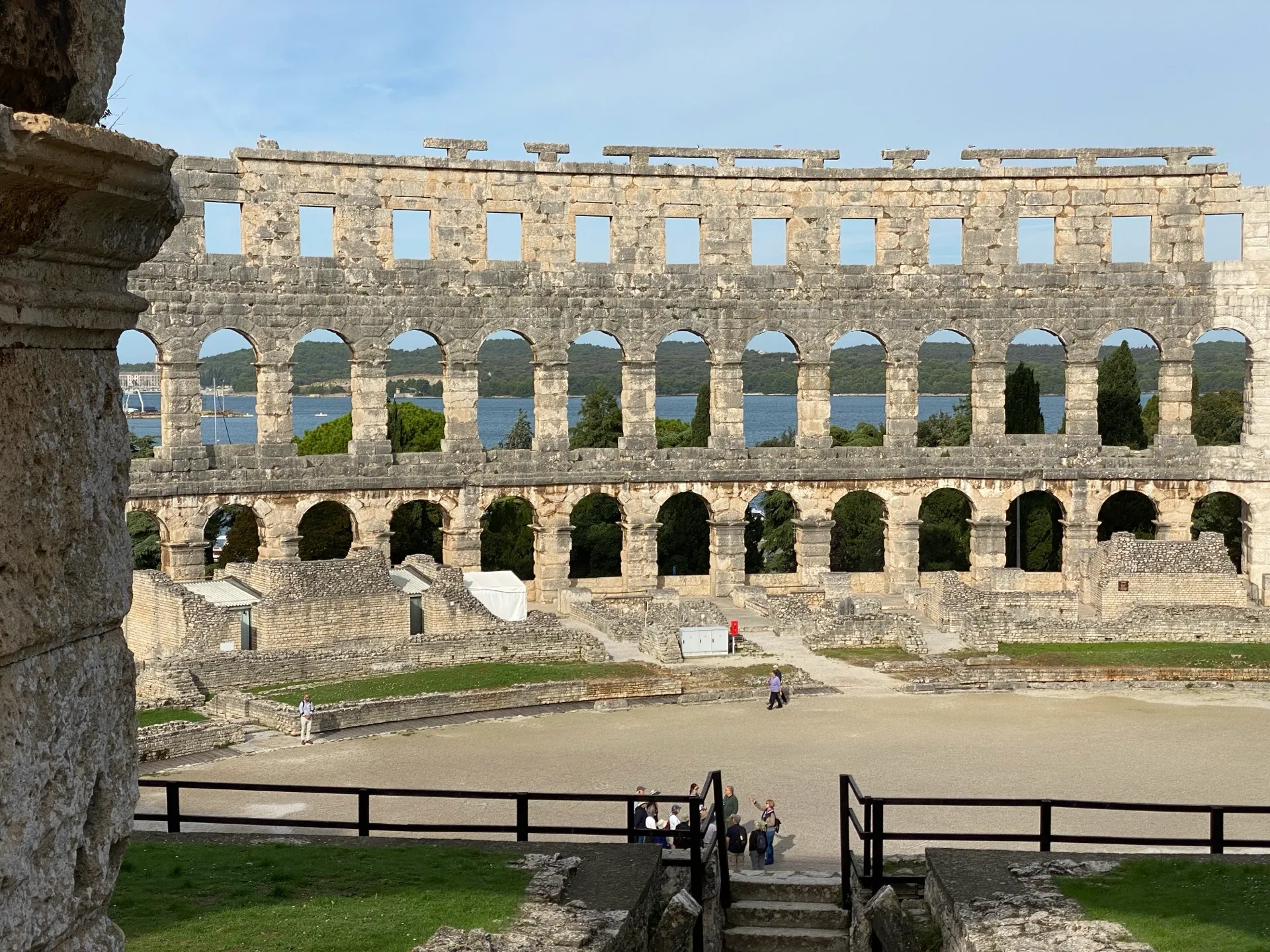
Useful compositions include:
- the full outer curve from across the road;
- repeating arches from a low interior position;
- the arena floor framed between massive wall sections;
- the city or sea through an arch;
- a high view that shows the oval and seating together.
Avoid blocking narrow passages, climbing for a better angle or using identifiable strangers as the main subject. Events may introduce additional restrictions.
Accessibility and families
The official Arena information describes the monument as partially accessible to wheelchair users and provides a dedicated accessibility map. “Partially” is important: an ancient site with changes of level cannot be assumed to offer the same route to every visitor.
Check the map before arrival and contact the site if a particular area is essential. The main experience can still be meaningful without every upper viewpoint because the outer wall and arena floor carry much of the visual impact.
For children, the monument works best with a simple story: where the sand was, how spectators entered, why the arches repeat and how the building is used today. Free multilingual audio guides are available through QR codes, so bring a charged phone and headphones if you want to use them comfortably.
There is little protection from heat on the open floor. Water, hats and sensible footwear matter in summer. Keep children away from barriers and uneven edges.
How to combine the Arena with Pula
Because the amphitheatre sits beside the city centre, it does not need an isolated day. A normal visit can be followed by a walk through central Pula toward other Roman remains and public squares.
This article deliberately stops at the Arena. A reliable full Pula route needs separate research into parking, the Arch of the Sergii, Forum, Temple of Augustus, museums and current pedestrian connections. Do not mistake one strong monument article for a complete city guide.
Honest verdict
Pula Arena is worth entering, not just photographing from the street. The interior explains the scale of the monument, and the changing views through the arches are the most memorable part of the route. The current €10 adult price is reasonable for a focused 45–90 minute visit, especially if the full visitor route and underground section are available.
The main planning risk is not distance or complexity but the event calendar. Check the official notice on the day, arrive early in hot weather and accept that a living cultural venue may contain modern staging.
Before travelling, check whether the full visitor route, including the underground gallery, is open.
Frequently asked questions
How much is admission to Pula Arena?
On 10 August 2026, the official regular price was €10 for adults and €5 for children, pupils and students. Recheck before visiting.
How long does a visit take?
Most visitors need about 45–90 minutes.
Can opening hours change for concerts?
Yes. Events, sound checks and stage installation can shorten hours or restrict access. Check the official changes page for your exact date.
Can I take photographs inside?
The official rules allow photography in visitor areas, but event-specific restrictions may apply. Do not climb on the structure.
Is Pula Arena wheelchair accessible?
It is partially accessible. Consult the official accessibility map and confirm any essential route before arrival.
Last updated: 10 August 2026.
[…] Pula Arena: tickets, opening hours and practical guide […]